
Book Appointment Now
New Dental Office Buildout: Complete Service Overview
Dental office build-out in New Services, NY. Complete build-outs from shell space. Equipment installation, operatories, plumbing. Call (347) 961-7357.
New Dental Office Buildout: Complete Service Overview
Building a dental office from the ground up — or transforming a raw shell space into a fully operational practice — is one of the most technically demanding construction projects in commercial healthcare. Unlike a typical office renovation, a dental buildout requires the precise coordination of general construction, medical-grade plumbing, high-voltage and low-voltage electrical, compressed air systems, vacuum lines, digital imaging infrastructure, and sensitive equipment installation. When any one of those trades misses a deadline or installs something out of sequence, the entire project stalls.
At GCMM Dental Construction, we serve as your single-source contractor for new dental office buildout services across New York City, Westchester, Long Island, New Jersey, and Connecticut. That means one contract, one point of contact, and one team responsible for every phase — from your first design conversation to the day you unlock the door and see your first patient. This page walks through exactly what that service includes and why it matters for your timeline, budget, and the long-term functionality of your practice.
What “New Dental Office Buildout” Actually Means
The term is used loosely in the industry, so let’s define it precisely. A new dental office buildout typically refers to one of two scenarios:
- Ground-up construction: A freestanding building constructed specifically for your practice, common in suburban markets like Long Island, Westchester, and parts of New Jersey where land and standalone commercial lots are available.
- Shell space buildout: A raw, unfinished commercial unit — often in a medical office building, strip mall, or mixed-use development — that needs full interior construction from concrete slab to ceiling grid. This is the most common scenario in NYC, where practices lease space in existing buildings.
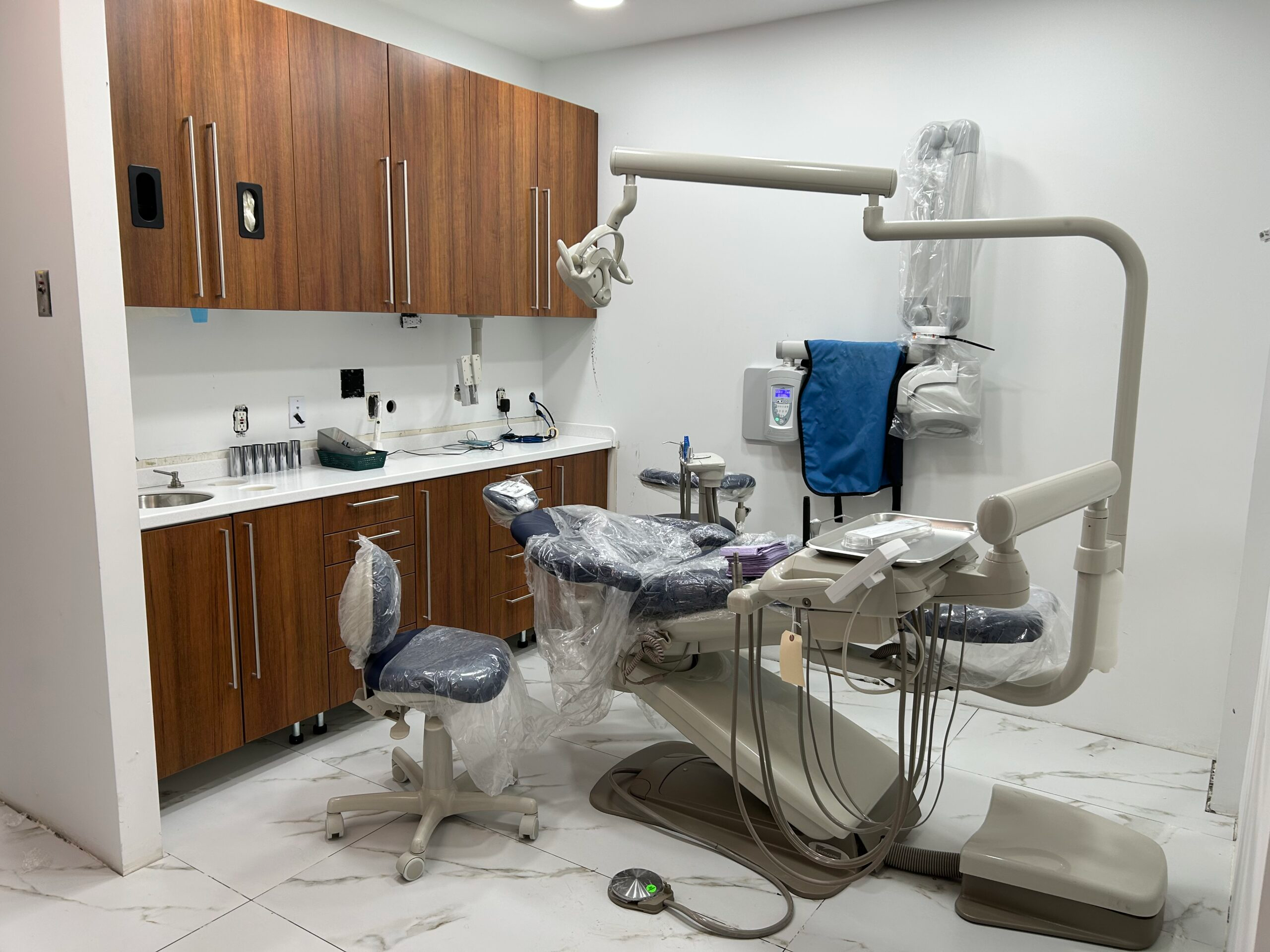
In both cases, you’re starting with essentially nothing: no plumbing, no partition walls, no cabinetry, no installed equipment. Every system you need to practice dentistry has to be designed, permitted, built, and tested from scratch. That scope is what separates a dental buildout from a simple office renovation — and it’s why working with Dental Office Buildout Services Contractor – GCMM Dental Office Construction matters so much when selecting your contractor.
wp:image {“id”:1224}
/wp:image
Phase 1: Design Coordination and Space Planning
Every successful buildout starts with a detailed space plan that accounts for both patient experience and clinical workflow. We work directly with your dental architect or can connect you with dental-specific design professionals we’ve partnered with across the tri-state area. Our role in this phase isn’t passive. We review drawings for constructability, flag issues that will cause problems during rough-in, and provide real cost feedback before you’re locked into a design.
For a typical four-operatory shell space in a NYC borough like the Bronx or Brooklyn, we’re analyzing traffic flow between the sterilization room and operatories, ensuring the compressor and vacuum room has adequate ventilation and sound insulation, and confirming that the existing building’s electrical service can support the equipment load you’re planning. These conversations — the ones that happen before a single wall goes up — are where budget overruns are prevented.
Key space planning considerations we address in every new dental office buildout:
- Operatory layout and chair orientation (window placement, natural light, sightlines)
- Central sterilization room location and instrument flow path
- Compressor and vacuum system placement with code-compliant mechanical room sizing
- ADA-compliant patient pathways, restrooms, and reception areas
- X-ray room shielding requirements based on equipment and usage volume
- Staff areas, private consultation rooms, and provider offices
Phase 2: MEP Rough-In — The Infrastructure That Makes Dentistry Possible
MEP stands for mechanical, electrical, and plumbing — but in a dental context, it also includes dental-specific systems that general contractors without dental experience often underestimate. Our rough-in phase covers:
Plumbing
Each operatory requires hot and cold water supply, waste lines, and drain connections sized for dental unit water lines and cuspidor systems. We also rough in for central water treatment systems if you’re using distilled or filtered water delivery, which is increasingly standard in modern practices running digital sensors and air/water syringes with strict infection control protocols.
Electrical
Dental equipment is power-intensive. A single operatory with a dental chair, delivery unit, curing light, intraoral camera, and monitor setup requires carefully planned dedicated circuits. We install dedicated 20-amp circuits per operatory, coordinate panel sizing with your equipment specifications, and run conduit for low-voltage and data lines in the same rough-in phase — not as an afterthought.
Compressed Air and Vacuum
Your central air compressor and vacuum system are the mechanical heart of your practice. We size these systems based on your operatory count and projected utilization, install copper or stainless distribution lines to each operatory junction, and pressure-test every line before walls close. Getting this wrong means leaks inside finished walls — a problem we’ve corrected more than once on projects that came to us mid-crisis after another contractor’s work.
HVAC and Ventilation
Dental offices have specific ventilation requirements, particularly in sterilization areas and X-ray rooms. We coordinate ductwork runs with your equipment layout so that supply and return vents don’t conflict with overhead cabinetry or pendant arms.
wp:image {“id”:1261}
/wp:image
Phase 3: Operatory Construction and Finish Work
Once rough-in is inspected and approved, we move into framing, drywall, flooring, and the finish work that defines how your practice looks and functions day to day. Dental operatories have specific requirements that set them apart from standard commercial construction:
- Wall blocking: Every operatory wall where cabinetry, monitor arms, or equipment rails will mount needs solid wood or metal blocking installed during framing — before drywall goes up. We map this blocking to your equipment specifications before we frame a single wall.
- Flooring transitions: Hard surface flooring (LVT or tile) is standard in clinical areas for infection control, transitioning to carpet or softer surfaces in reception. We manage these transitions cleanly, including proper subfloor leveling that protects equipment from vibration and stress.
- Ceiling systems: Acoustic tile ceilings in most clinical areas, with attention to tile placement so that lighting, vents, and sprinkler heads land correctly relative to the chair position below.
- Cabinetry installation: We install dental-specific cabinetry systems — whether pre-fabricated dental casework or custom millwork — with the precision the clinical workflow demands.
For dentists considering their equipment choices during this phase, our team has published a practical resource on best dental chairs for your new office: a contractor’s installation guide that walks through what different chair configurations mean for your rough-in requirements.
Phase 4: Dental Equipment Installation
This is where GCMM Dental Construction separates itself from general contractors who subcontract equipment installation to whoever is available. Our team is manufacturer-trained and certified by A-dec, Midmark, and Planmeca — three of the most widely used dental equipment manufacturers in the industry. That certification means we’ve completed factory-level training on how these systems are designed, how they connect, and how they’re calibrated after installation.
Manufacturer-trained installation matters for several practical reasons:
- Equipment warranties are often contingent on certified installation. An improperly installed chair or delivery unit can void coverage before you’ve seen a single patient.
- Calibration errors at installation — improper water pressure, incorrect vacuum flow, misaligned sensor holders — create clinical problems that are difficult to diagnose after the fact.
- Our team recognizes installation issues specific to each manufacturer’s product line and can resolve them without manufacturer service calls that delay your opening.
We install dental chairs and delivery systems, dental unit waterlines, overhead lights, cabinetry-mounted monitors, intraoral camera systems, and integration with digital radiography equipment including CBCT units when your layout includes one.
wp:image {“id”:1260}
/wp:image
Phase 5: IT Infrastructure and Technology Integration
Modern dental practices are technology-forward environments. Practice management software, digital radiography, intraoral cameras, patient entertainment systems, and networked equipment all require a thoughtfully designed IT infrastructure that’s built into the walls — not added on top of them after construction. Our dental office IT and technology services are integrated into the buildout from day one.
During rough-in, we install structured cabling (Cat6 or Cat6A), fiber runs where needed for imaging systems, dedicated network closet space with proper cooling, and conduit pathways for future technology additions. During finish and equipment phases, we terminate and test every data drop, configure the network rack, and coordinate with your software vendor for system integration testing before your opening date.
This integration is particularly critical in multi-operatory practices where imaging data has to move reliably between operatories, the front desk, and any cloud-based backup systems you’re using.
Phase 6: ADA Compliance, Inspections, and Certificate of Occupancy
A dental practice is a place of public accommodation, which means full ADA compliance is not optional — it’s a legal requirement and an ethical one. We build every practice to current ADA standards: accessible entrances, compliant restroom fixtures and clearances, proper counter heights at reception, and accessible pathways throughout the clinical areas.
We manage all required inspections — building, plumbing, electrical, fire suppression, and health department pre-opening inspections where required — and coordinate with the relevant authorities having jurisdiction (AHJ) in your municipality. For NYC practices, that means navigating the Department of Buildings, Con Edison coordination for service upgrades when needed, and local health department requirements. For our New Jersey clients, our team is equally familiar with New Jersey dental office construction permitting and inspection requirements across the state’s varied municipalities.
We don’t hand you a completed space and leave inspection coordination to you. We see every project through to the Certificate of Occupancy and make sure you have every document you need before we close out.
Why Single-Source Contracting Matters for Dental Buildouts
The most common source of dental buildout delays and cost overruns is coordination failure between separate contractors. When your GC, your plumber, your electrician, your equipment vendor, and your IT company are all operating under separate contracts with no single party accountable for the whole, work gets done out of sequence. Walls close before electrical inspections. Equipment arrives before floors are finished. The compressor room isn’t ready when the HVAC contractor is on site.
We’ve written about this in detail in our resource covering the 5 costly mistakes dentists make when building a new office — and coordination failure is consistently at the top of the list.
As the single-source contractor, we own the schedule, manage every trade, and are accountable for every phase. That structure saves you time, protects your budget, and means you’re talking to one person — not five — when you have a question about your project.
We are the dental office contractors for full buildouts that practices across the tri-state area trust precisely because we’ve built this service model to eliminate the gaps that cost dentists money and delay their opening dates.
Frequently Asked Questions
How long does a new dental office buildout take?
A typical shell space buildout for a three- to five-operatory practice takes between 16 and 24 weeks from permit approval to Certificate of Occupancy, depending on the scope, municipality, and equipment lead times. Ground-up construction timelines vary more significantly. We provide a detailed schedule at the start of every project and update it weekly.
What does a new dental office buildout cost per square foot?
Dental construction in the NYC metro market typically runs $200 to $350+ per square foot for full buildouts, depending on finish level, equipment specifications, and building conditions. We provide detailed cost estimates after reviewing your space plan and equipment list — not ballpark numbers that shift later.
Do you work with dentists who already have an architect?
Yes. We work with your existing design team or can recommend dental-specific architects we’ve collaborated with successfully. Our role is to build what’s been designed, catch constructability issues early, and provide cost feedback during design development so there are no surprises when you go to bid.
Do you handle permits?
Yes. We manage permit applications, coordinate with plan reviewers, schedule all required inspections, and manage the process through to final sign-off. You don’t need to navigate the Department of Buildings or municipal permit offices on your own.
Start Your New Dental Office Buildout with GCMM
GCMM Dental Construction is headquartered at 876 Kinsella St, Bronx, NY, and serves dental practices throughout New York City, Westchester, Long Island, New Jersey, and Connecticut. Whether you’re planning a four-operatory shell space in Manhattan, a freestanding practice on Long Island, or a multi-provider group practice in New Jersey, our team has the manufacturer training, trade coordination experience, and dental-specific expertise to deliver your project on time and built right.
Call us at (347) 961-7357 or email gary@gcmm.nyc to schedule a consultation. We’ll review your space, your equipment plans, and your timeline — and give you a straight answer about what it takes to build your practice the right way.
With factory certification from A-dec, our team builds operatory rooms to exact equipment specifications. GCMM also offers commercial HVAC contractor for non-dental commercial projects. All work meets ADA dental office design guidelines.