
Book Appointment Now
How to Choose the Right Dental Office Contractor
How to Choose the Right Dental Office Contractor. Expert insights from GCMM Dental Construction. Call (347) 961-7357 for your project.
How to Choose the Right Dental Office Contractor
Choosing the wrong contractor for your dental office buildout is one of the most expensive mistakes a dentist can make. We’ve seen it happen across New York City, Westchester, Long Island, New Jersey, and Connecticut — a practice owner hires a general commercial contractor who talks a good game, and six months later they’re dealing with plumbing that can’t support a dental unit, electrical panels that trip every time the compressor kicks on, or operatories that fail ADA inspection. The rework costs more than doing it right the first time.
This guide is designed to help you ask the right questions, evaluate bids with a critical eye, and understand exactly what separates a specialized dental contractor from someone who’s just built a few offices and thinks dentistry is the same as any other commercial tenant improvement. It is not the same.
Why General Commercial Contractors Struggle with Dental Buildouts
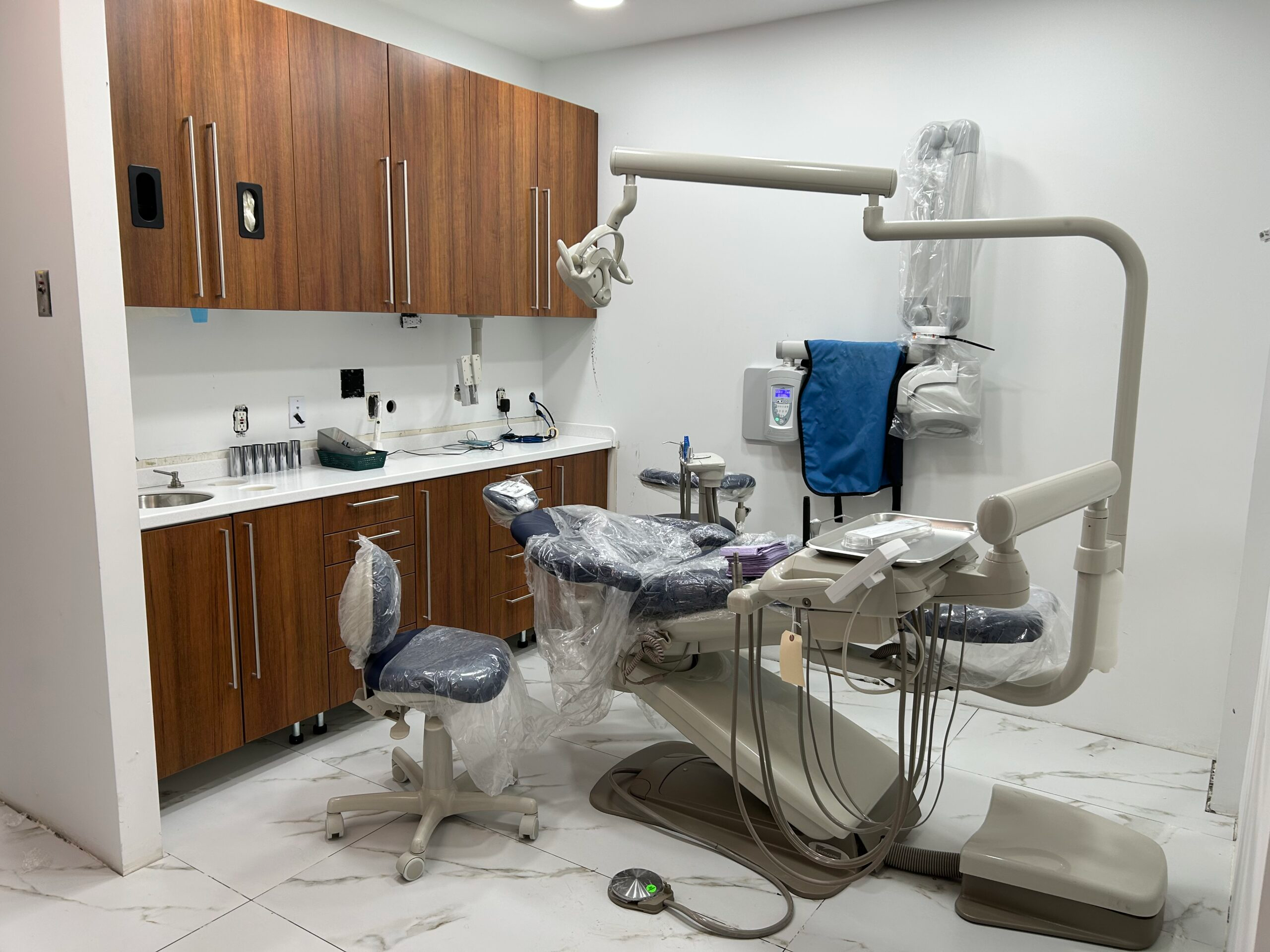
Dental offices are among the most technically complex commercial environments in healthcare construction. A single operatory requires coordinated rough-in for dental unit water lines, vacuum systems, compressed air, electrical (often multiple dedicated circuits), and data/networking — all of which must be precisely placed before a single wall is closed. If the plumber doesn’t know that a dental unit’s water inlet needs to land within a few inches of a specific location, the entire cabinetry layout has to change. That kind of coordination requires a contractor who has done this dozens of times with real dental equipment in hand.
General contractors frequently underestimate lead times for dental-specific items like amalgam separators, central vacuum systems, and dental cabinetry. They also tend to miss infection control requirements — like proper ventilation separation between sterilization rooms and operatories — that are standard knowledge in dental construction but not covered in general commercial building codes. To understand the full scope of what goes wrong when these details are overlooked, read our detailed breakdown of the 5 Costly Mistakes Dentists Make When Building a New Office.
wp:image {“id”:1261}
/wp:image
Certifications to Look For in a Dental Contractor
Not all certifications are created equal, but in dental construction, manufacturer training is the gold standard. Here’s what actually matters:
Manufacturer-Trained Equipment Installation Credentials
The most meaningful credential a dental contractor can hold is manufacturer certification for the major dental equipment brands. Our team at GCMM Dental Construction holds manufacturer-trained certifications from A-dec, Midmark, and Planmeca — three of the most widely specified dental chair and delivery system brands in the industry. This means we’ve been trained directly by the equipment manufacturers on proper installation, electrical and plumbing rough-in specifications, and commissioning procedures.
Why does this matter to you? When a contractor is manufacturer-trained, the equipment warranty remains intact, the installation meets the manufacturer’s exact specifications, and the dealer who supplied the equipment doesn’t have to come back and fix the contractor’s work. We’ve received calls from dentists in the Bronx and Long Island who had chairs installed by uncertified contractors and were told by their equipment dealer that the warranty was voided. That’s a $15,000–$30,000 problem per chair.
When evaluating any contractor, ask specifically: “Are you certified by the equipment manufacturer for the brand I’m purchasing?” A general contractor cannot answer yes to this question.
ADA Compliance Experience
The Americans with Disabilities Act has specific requirements for healthcare facilities that go beyond standard commercial construction. In a dental office, this includes operatory door widths (minimum 32″ clear), accessible patient pathways, restroom accessibility dimensions, reception counter heights, and parking requirements. These aren’t suggestions — failure to meet ADA standards can result in complaints, fines, and mandatory expensive retrofits after opening.
Ask every contractor you interview: “Have you navigated ADA compliance for dental offices specifically?” Follow up by asking them to describe a project where ADA requirements shaped the floor plan design. A contractor with genuine experience will have a real answer — they’ll talk about turning radii for wheelchair access, the difference between ADA-required and best-practice operatory configurations, and how they coordinate with the practice’s equipment dealer to ensure chair placement doesn’t block accessible pathways.
General Contractor License and Insurance in Your State
This is table stakes, but it’s worth verifying directly. In New York, general contractors must be licensed by the New York City Department of Buildings for projects in the five boroughs. New Jersey, Connecticut, and Westchester all have their own licensing structures. Ask for the license number, verify it online, and confirm that the contractor carries general liability insurance (minimum $2 million per occurrence for healthcare construction) and workers’ compensation coverage. Get certificates of insurance naming you as an additional insured before a single tool is unpacked.
wp:image {“id”:1260}
/wp:image
Questions to Ask Before You Hire a Dental Office Contractor
Beyond certifications, the interview process is where you separate candidates. Here are the questions that actually reveal whether a contractor knows dental construction:
- “How many dental operatories have you built in the last two years?” — A specialized contractor will have a specific number. Anyone who hedges or says “quite a few” doesn’t track this the way a specialist would.
- “Who is your dental equipment installer, and are they manufacturer-certified?” — Some contractors subcontract equipment installation to a separate company. Know who that is before you sign.
- “How do you handle coordination between the equipment dealer and your rough-in schedule?” — The right answer involves a specific process: pre-construction coordination meetings, shop drawings reviewed against equipment specs, and a documented rough-in checklist per operatory.
- “Have you installed central vacuum and compressed air systems for dental offices?” — Dental vacuum and air systems are completely different from medical gas or standard HVAC. This is a disqualifying question if the answer is no.
- “Can you provide references from dental clients I can call?” — Not email references. Phone calls. Talk to dentists who have actually worked with this contractor, ask about timelines, communication, and whether the finished space matched expectations.
- “How do you handle permit expediting in this jurisdiction?” — In New York City especially, permit timelines can make or break a project schedule. Contractors with real NYC dental experience have established relationships with expeditors and understand the Department of Buildings filing process for healthcare occupancies.
How to Compare Bids — What the Numbers Are Really Telling You
Comparing bids for dental construction is not like comparing quotes for a home renovation. A low bid is almost always missing something. Here’s how to read bids properly:
Line-Item Specificity
A legitimate dental construction bid should break out costs by category: demolition, framing and drywall, electrical (rough-in and finish), plumbing (rough-in and finish), HVAC, specialty dental rough-in, flooring, ceilings, cabinetry, equipment installation, permit fees, and contingency. If a contractor gives you a single lump-sum number without line items, you have no way to compare it against another bid or understand where the money is going.
For detailed cost benchmarks by project type and market, see our guide on How Much It Costs to Build a Dental Office in 2026 — it covers typical price ranges for buildouts in the NYC metro area, including breakdowns by operatory count and build type.
Scope Inclusions and Exclusions
The most common bid manipulation tactic is excluding items that every dentist assumes are included. Common exclusions to watch for: permit fees, equipment installation (listed as a separate contract), IT and data cabling, medical gas (if applicable), signage, and punch list labor. Make sure every bid you compare is all-in for the same scope. If one contractor includes permit fees and another doesn’t, the lower-looking bid may actually be higher when you normalize it.
Timeline and Payment Schedule
A contractor who wants more than 30–40% upfront before mobilization is a red flag. Standard payment schedules in commercial construction tie draws to completed milestones — rough-in complete, inspections passed, finish work complete. If a contractor wants 50–60% before breaking ground, walk away.
wp:image {“id”:1224}
/wp:image
Dental Contractor Hiring Checklist
Use this checklist when evaluating any contractor for your dental office project:
- ☐ Holds valid general contractor license in your state or municipality
- ☐ Carries minimum $2M general liability insurance and workers’ comp (with certificates provided)
- ☐ Has manufacturer-training certifications from at least one major dental equipment brand (A-dec, Midmark, Planmeca, or equivalent)
- ☐ Can document ADA-compliant dental projects with references available by phone
- ☐ Provides line-item bids with clearly defined inclusions and exclusions
- ☐ Has specific experience with dental vacuum, compressed air, and equipment rough-in
- ☐ Has a defined process for coordinating with your equipment dealer pre-construction
- ☐ Uses milestone-based payment schedules, not large upfront deposits
- ☐ Has experience pulling permits and working with building departments in your specific location
- ☐ Can provide a realistic project timeline with buffer for inspections and equipment lead times
What Makes a Specialized Dental Contractor Different: A Real Example
Here’s a scenario we encounter regularly. A dentist in Westchester signs a lease for 2,200 square feet in a medical office building. They get three bids: one from a general contractor who’s done some medical offices, one from a local buildout company recommended by their landlord, and one from a specialized dental contractor. The general contractor’s bid is $30,000 lower than the dental specialist’s.
The dentist chooses the general contractor. Here’s what happens: the rough-in plumbing for the dental units is placed based on standard plumbing assumptions, not A-dec rough-in specifications. When the equipment dealer arrives to install the chairs, the water inlet locations are off by 14 inches on two of the four operatories. The walls are already finished. The contractor has to open drywall, move plumbing, re-patch and repaint. That change order costs $8,400 and delays the opening by three weeks. Three weeks of lost revenue at an average of $6,000/week in a new dental practice is $18,000. The total cost of choosing the cheaper contractor: $26,400 — nearly as much as the original savings, before accounting for the stress and scheduling chaos.
A manufacturer-trained dental contractor coordinates rough-in placement directly from the equipment shop drawings before the walls are framed. The chairs land exactly where they should, the dealer installs the equipment on schedule, and the practice opens on time.
This is also why proper planning for specific equipment matters so much — whether you’re installing a CBCT machine, a cone beam system, or standard operatory chairs. Our technical guides on dental CBCT and X-ray installation requirements and choosing and installing dental chairs in a new office walk through exactly what contractor coordination these systems require.
Frequently Asked Questions
How long does a dental office buildout typically take?
For a standard 4–6 operatory buildout in the NYC metro area, construction typically runs 12–18 weeks from permit approval to certificate of occupancy. Permit timelines vary significantly — New York City can add 6–10 weeks to the process, while suburban New Jersey or Connecticut jurisdictions may be faster. Plan for a total project timeline of 6–9 months from lease signing to opening day when you factor in design, permitting, construction, and equipment installation.
Do I need a separate dental equipment installer or does the contractor handle that?
Ideally, you want a contractor who is manufacturer-trained and can handle both the rough-in and the final equipment installation. When these are separated between two companies, coordination gaps emerge. At GCMM Dental Construction, our A-dec, Midmark, and Planmeca certifications mean we handle both the infrastructure and the equipment installation as a single coordinated scope.
What’s the difference between ADA-compliant design and ADA-accessible design?
ADA-compliant means the space meets the minimum legal requirements under the Americans with Disabilities Act. ADA-accessible design goes further — it anticipates the needs of patients with mobility limitations, visual impairments, or other disabilities in a way that feels welcoming rather than just technically adequate. For dental practices that want to serve all patients well, we recommend designing to the higher standard, not just the minimum.
Work With a Contractor Who Knows Dental
At GCMM Dental Construction, we’ve built and renovated dental offices across New York City, Westchester, Long Island, New Jersey, and Connecticut. Our team holds manufacturer-training certifications from A-dec, Midmark, and Planmeca, and every project we deliver is built to full ADA compliance. We’re not a general contractor who occasionally does dental work — dental construction is all we do.
If you’re evaluating contractors for a new dental office or renovation project, we’d welcome the chance to walk you through our process. You can learn more about our approach and full range of capabilities as full-service dental office contractors on our main services page.
To discuss your project, call us at (347) 961-7357, email gary@gcmm.nyc, or visit us at 876 Kinsella St, Bronx, NY. We serve dental practices throughout the NYC metro area and are happy to schedule a consultation at your site.
Ready to get started? Call (347) 961-7357 today and speak directly with our team about your dental office project.
As a manufacturer-trained contractor with certification from A-dec, GCMM builds operatory rooms to exact equipment specifications. For broader commercial construction needs, our parent company GCMM Home Improvement provides commercial HVAC contractor. All projects follow ADA dental office design guidelines.