
Book Appointment Now
modern dental office design contractors
modern dental office design contractors. Expert insights from GCMM Dental Construction. Call (347) 961-7357 for your project.
Modern Dental Office Design Contractors: Westchester, Long Island & NYC
Modern dental office design contractors in the New York metro area handle everything from architectural planning and equipment layout to ADA-compliant construction and manufacturer-certified installation. A typical new dental office buildout in Westchester County, Long Island, or New York City ranges from $150 to $350+ per square foot, with full projects completing in 12 to 20 weeks depending on scope, permitting jurisdiction, and equipment lead times. Working with a contractor who holds manufacturer certifications — like A-dec, Midmark, or Planmeca — protects your equipment warranties and eliminates costly coordination failures between trades.
$150–$350+
Per sq ft for NYC metro dental buildouts in 2026
12–20 Weeks
Typical project timeline from permits to opening day
3
Manufacturer certifications: A-dec, Midmark, Planmeca
5 Regions
NYC, Westchester, Long Island, New Jersey, Connecticut
Are you opening a new dental practice or repositioning an existing one to reflect current standards in patient experience and clinical workflow? If so, the contractor you choose will determine whether your vision becomes a functional, code-compliant, and warranty-protected reality — or an expensive series of coordination failures. Modern dental office design is a highly specialized discipline that intersects architecture, clinical engineering, plumbing, medical gas, and precision equipment installation. Not every commercial contractor understands these intersections well enough to execute without costly mistakes.
The New York metro area adds another layer of complexity. Westchester County municipalities, New York City’s five boroughs, and Long Island’s Nassau and Suffolk County jurisdictions each operate with distinct permitting requirements, inspection timelines, and building code interpretations. A contractor who builds restaurants or retail spaces — even one with a strong general commercial track record — typically lacks the specific knowledge to navigate medical occupancy classifications, dental equipment rough-in specifications, and ADA accessibility requirements simultaneously.
GCMM Dental Construction focuses exclusively on dental practice buildouts across this region. Our team holds manufacturer training certifications from A-dec, Midmark, and Planmeca, which means we understand equipment rough-in requirements before a single wall goes up — not after.
wp:image {“id”:1696}
/wp:image
What Makes a Dental Office Design Contractor “Modern”?
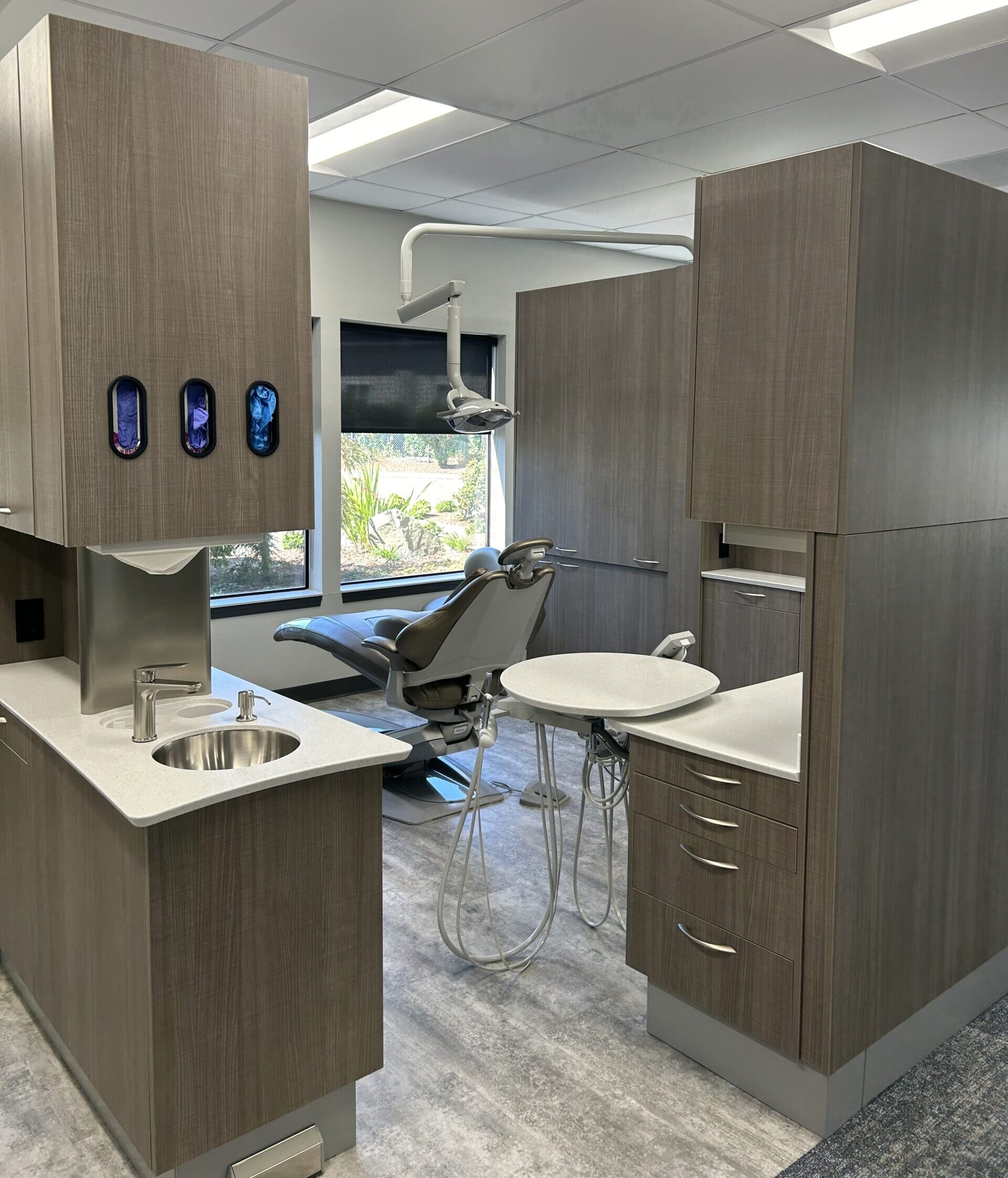
The term “modern” in dental office design isn’t just aesthetic — it refers to a clinical, technological, and patient-experience standard that has evolved significantly over the past decade. Modern dental offices are designed around digital radiography workflows, integrated intraoral camera systems, and chairside monitor positioning that didn’t exist in practices built 15 or 20 years ago. A contractor who builds to modern standards understands these requirements at the rough-in stage, not after drywall is closed.
From a clinical perspective, modern operatory design incorporates specific power requirements for LED operatory lights, digital imaging sensors, electric handpiece motors, and patient entertainment systems — all of which must share circuits without interference or voltage drop. Sterilization centers in current-standard practices are designed as true processing hubs with sequential workflow zones: contaminated intake, ultrasonic cleaning, packaging, autoclave processing, and sterile storage. Each zone requires specific clearances, surface materials, and utility access that a generalist contractor frequently treats as afterthoughts.
On the patient experience side, modern dental offices in competitive Westchester and Long Island markets use design elements like indirect LED accent lighting, seamless cabinetry with integrated displays, and sound-dampening wall assemblies between operatories. These details require coordination between your interior designer, equipment vendor, and construction team — and they require a contractor experienced enough to sequence that coordination properly.
Pro Tip
When evaluating modern dental office design contractors, ask specifically about their experience with your equipment manufacturer. A-dec, Midmark, and Planmeca all have distinct rough-in requirements for compressed air, vacuum, water supply, and drain positioning. A contractor trained by the manufacturer will have those spec sheets memorized — a generalist will be reading them for the first time on your job site.
Regional Considerations: Westchester, Long Island, and NYC Permitting
Permitting for dental office construction in the New York metro area is not a uniform process. Each jurisdiction presents its own sequence of approvals, required documents, and inspection milestones. Understanding these differences before you sign a lease is one of the most valuable things an experienced dental construction contractor can offer.
In Westchester County, permit applications for dental offices typically require architectural drawings stamped by a licensed New York State architect, MEP (mechanical, electrical, plumbing) drawings, and often a site survey. Municipalities like White Plains, Yonkers, and Scarsdale each have their own building departments with different documentation standards and inspector scheduling practices. Lead times for permit approval in Westchester commonly run four to eight weeks, which must be factored into your opening timeline.
On Long Island, Nassau and Suffolk County each operate separate permitting systems, and many incorporated villages within those counties maintain their own building departments on top of county requirements. A dental office buildout in Great Neck, for example, may require approvals from both the Village of Great Neck and Nassau County depending on scope. Our team’s experience across these jurisdictions means we’re not learning your municipality’s process on your project — we’ve been through it before.
In New York City, dental offices typically require a New Building (NB) or Alteration Type 1 (ALT1) filing through the NYC Department of Buildings, with a licensed architect of record, special inspections for structural work, and — in many cases — Landmarks Preservation Commission review if the building is in a designated historic district. Coordinating all of this while maintaining equipment installation timelines requires a contractor who treats permit management as a core project deliverable, not a side task. For a deeper look at working with qualified dental contractors across these markets, see our guide on top dental office contractors in NYC, Long Island, and Westchester.
Get a Free Dental Office Design Consultation
Whether you’re planning a new buildout in Westchester, Long Island, or New York City, our team can walk you through realistic timelines, permitting requirements, and equipment coordination before you commit to a space. No obligation — just expert guidance from a contractor who specializes exclusively in dental construction.
wp:image {“id”:1224}
/wp:image
Cost Breakdown: Modern Dental Office Buildouts in 2026
Construction costs for dental offices in the New York metro area reflect both the complexity of the work and the region’s labor market. Below is a realistic cost framework based on current 2026 market conditions across our service area. These figures represent typical ranges — your specific project costs will depend on existing conditions, scope of work, equipment selections, and your specific municipality’s requirements.
| Project Type | Typical Size | Cost Range (2026) | Timeline |
|---|---|---|---|
| Single-Operatory Startup | 600–900 SF | $120,000–$220,000 | 10–14 weeks |
| 3–4 Operatory New Office | 1,200–1,800 SF | $280,000–$520,000 | 14–18 weeks |
| 5–6 Operatory Full Buildout | 2,000–2,800 SF | $450,000–$850,000 | 16–22 weeks |
| Renovation / Refresh (Existing Office) | Varies | $80,000–$250,000 | 6–12 weeks |
| Full Practice Relocation | 1,500–3,000 SF | $350,000–$750,000 | 14–20 weeks |
Key cost drivers in the NYC metro dental construction market include the price of union labor (required in many NYC commercial buildings), dental-specific MEP work like central vacuum systems, compressed air lines, and nitrous oxide plumbing, and the cost of ADA-compliant restroom construction which is required in all new dental tenancies. Equipment costs — chairs, delivery units, cabinetry, imaging systems — are separate from construction costs and typically add $50,000 to $200,000+ depending on the number of operatories and technology package selected.
Warning
Be cautious of dental construction bids that seem significantly lower than market rate. In the New York metro area, a buildout that “forgets” to include ADA restroom upgrades, electrical panel upgrades, or dental-specific plumbing will hit you with substantial change orders mid-project. Always ask for a line-item bid that explicitly includes these categories — not a lump-sum number with vague inclusions.
Manufacturer-Certified Installation: Why It Matters
Dental equipment manufacturers like A-dec, Midmark, and Planmeca invest significant resources in training programs for contractors and technicians. These programs exist because their equipment — which can cost $25,000 to $60,000 per operatory — requires precise rough-in conditions to function properly and maintain warranty coverage. When a non-certified contractor installs dental chair pedestals, delivery units, or central vacuum systems without following manufacturer specifications, the equipment may function initially but fail sooner, require early service, or void warranty protections that could have saved the practice tens of thousands of dollars.
Our team’s certifications from all three of these major manufacturers mean we receive current installation documentation, participate in product training updates, and have direct technical support relationships when questions arise during installation. For a practice investing in a Planmeca ProOne panoramic imaging system alongside a full A-dec operatory package, having a single contractor who is certified to install both — and coordinate their infrastructure requirements in the framing stage — is a material advantage over managing separate equipment vendors and a general contractor who is unfamiliar with either manufacturer’s requirements.
This integration is particularly important for digital imaging installations, which require specific conduit routing, shielded circuit runs, and in some cases radiation shielding documentation for building department submissions. A contractor who has been through this process with your specific imaging equipment will have that documentation ready and know exactly which inspections require it. Learn more about how we approach full-service buildouts in our resource on dental practice design-build contractors in New York.
wp:image {“id”:847}
/wp:image
Modern Dental Office Design Elements Worth Investing In
Not every design upgrade delivers equal return. Based on our work across the New York metro area, the following design investments consistently generate the strongest combination of clinical efficiency improvement and patient retention impact:
- Open-bay vs. private operatory configurations: Modern general practices often blend both, using open bays for hygiene and private rooms for restorative and surgical work. This requires thoughtful wall placement and HVAC zoning during rough construction — not a decision you can revisit cheaply later.
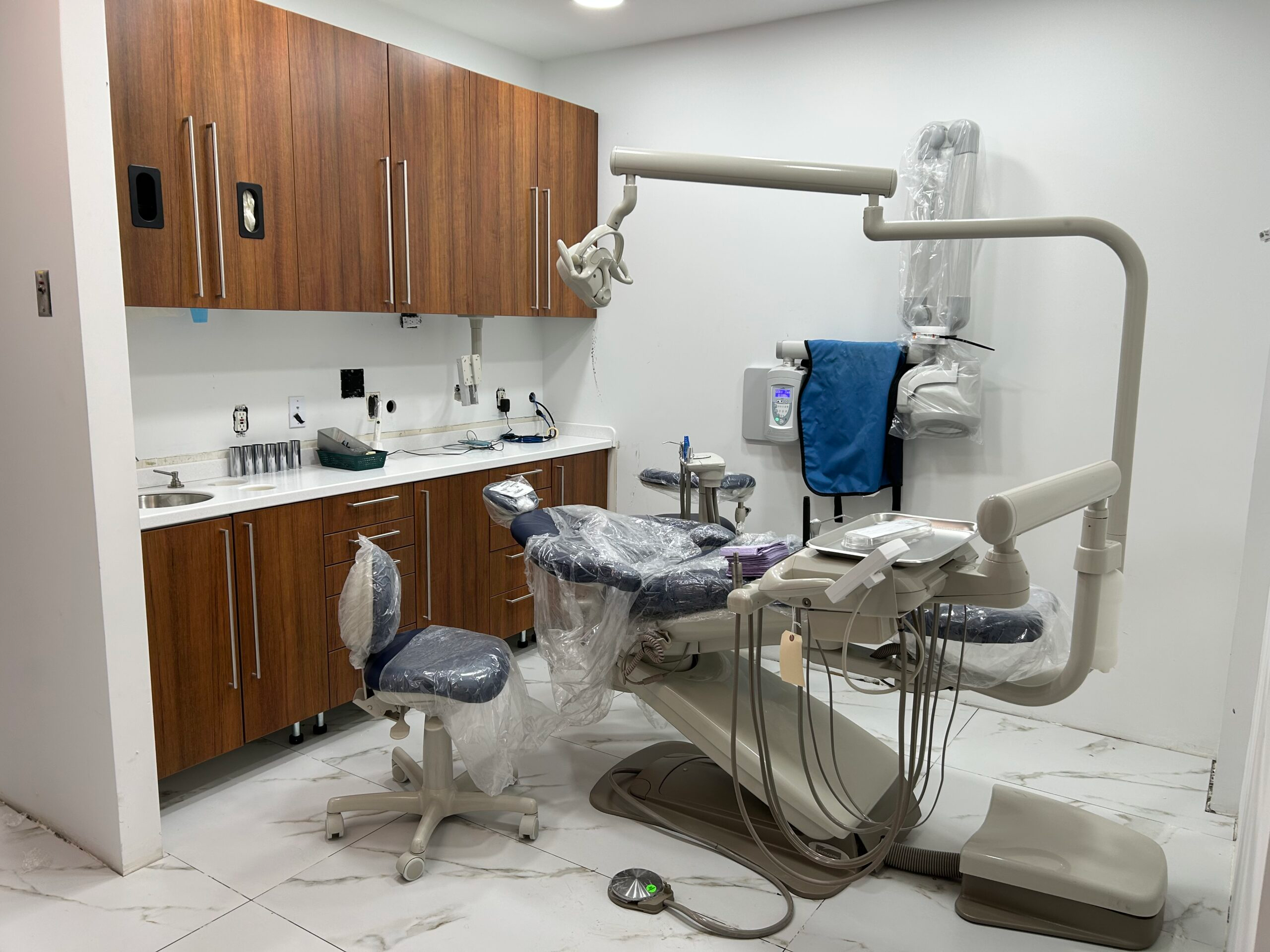
- Integrated cabinetry with equipment mounting: Custom cabinetry that integrates monitor arms, delivery unit positioning, and assistant’s instrumentation creates a cleaner operatory that’s also more ergonomically functional. This level of integration requires your cabinetry fabricator and equipment vendor to coordinate early in the design process.
- Centralized sterilization vs. per-operatory sterilization: Modern infection control standards favor centralized processing, but the physical layout of your space needs to support appropriate traffic flow. In Westchester and Long Island suburban practices, centralized sterilization is often feasible. In dense NYC spaces, distributed solutions may be necessary.
- Sound control between operatories: Patients notice — and remember — when they can hear a neighboring procedure through the wall. Sound-rated wall assemblies with resilient channel framing, acoustic insulation, and properly sealed penetrations are a modest upfront investment with significant patient experience impact.
- LED lighting design: Operatory-specific lighting that layers task illumination from the dental light with ambient indirect lighting reduces patient anxiety and improves the perceived quality of care. This requires coordination between your electrical contractor and your equipment installer during rough-in. For more on how modern design comes together in Long Island practices, see our overview of modern dental office design on Long Island.
How do I find a qualified modern dental office design contractor in Westchester County or Long Island?
Look for contractors who specialize exclusively — or primarily — in dental office construction rather than general commercial work. Ask for evidence of manufacturer certifications from major dental equipment brands like A-dec, Midmark, or Planmeca. Ask about their experience with permitting in your specific municipality, since Westchester and Long Island jurisdictions vary significantly. Request references from dental practices they’ve completed in your area, and ask those dentists specifically about the contractor’s knowledge of dental-specific systems like compressed air, vacuum, and medical gas. A contractor who is vague about these details or treats dental work as “just another commercial buildout” is likely not the right choice for your project.
How long does a modern dental office buildout take in the New York metro area?
From lease signing to opening day, most dental office buildouts in the NYC metro area take 14 to 20 weeks. Permitting typically accounts for 4 to 8 weeks of that timeline in Westchester and Long Island jurisdictions, and 6 to 10 weeks in New York City. Actual construction runs 8 to 12 weeks for a standard 3–5 operatory build. Equipment lead times — particularly for custom cabinetry, dental chairs, and imaging systems — can run 10 to 16 weeks and should be ordered during the permitting phase to avoid delays. The most common reason dental office openings are delayed is equipment arriving after construction is complete, which is entirely preventable with proper project management.
What ADA requirements apply to new dental office construction in New York?
New dental office tenancies in New York are required to comply with the Americans with Disabilities Act (ADA) and New York State Building Code accessibility provisions. This typically requires at least one ADA-compliant restroom with specified turning radius, grab bar positioning, and accessible fixture heights; accessible reception counter configuration; and compliant paths of travel from the building entrance through the clinical areas. In practice, ADA compliance for a dental office means the accessible restroom alone can represent $15,000 to $30,000 of the construction budget, particularly in older buildings where existing plumbing and floor-to-ceiling height present constraints. An experienced dental contractor will assess these requirements during pre-construction site review.
What is the difference between a design-build contractor and a general contractor for dental offices?
A design-build contractor manages both the architectural/design phase and the construction phase under a single contract, which simplifies communication and reduces the risk of conflicts between your design documents and construction execution. A traditional general contractor builds from plans prepared by a separate architect. For dental offices, design-build can be advantageous because the contractor’s knowledge of dental equipment requirements can be incorporated directly into the design documents — rather than discovered as discrepancies during construction. However, the quality of the design-build relationship depends heavily on the contractor’s depth of dental-specific knowledge, which varies widely in the market.
Do dental equipment manufacturers require certified installers?
Major dental equipment manufacturers — including A-dec, Midmark, and Planmeca — have formal training and certification programs for contractors and technicians who install their equipment. While some manufacturers may not void warranties solely based on installer certification status, their technical support and warranty service processes are significantly smoother when the installation is performed by a trained team. More practically, certified installers are familiar with the current rough-in specifications, which means fewer errors during construction that require expensive corrections when equipment arrives. For practices investing $150,000 or more in dental equipment, working with a certified installer is a straightforward way to protect that investment.
What should I budget for a modern dental office buildout in NYC in 2026?
In 2026, a realistic all-in budget for a modern 3–4 operatory dental office buildout in New York City — including construction, equipment, and soft costs like permits and architectural fees — typically falls between $450,000 and $750,000. Construction costs alone (excluding equipment) commonly run $200 to $350 per square foot for dental-specific work in NYC. Westchester and Long Island projects are generally 10 to 20 percent less expensive than equivalent NYC projects due to lower labor costs and less complex permitting. These ranges assume a tenant improvement allowance has been negotiated with your landlord, which can offset $50 to $100 per square foot of construction cost in competitive commercial markets.
Authority Resources for Dental Office Construction
- ADA Standards for Accessible Design — U.S. Department of Justice
- New York State Department of Health — Office-Based Surgery & Clinical Standards
- OSHA Healthcare Industry Standards
- American Dental Association — Dental Office Design Resources
Ready to Build Your Modern Dental Office in Westchester, Long Island, or NYC?
Our team at GCMM Dental Construction brings manufacturer-certified expertise, deep regional permitting knowledge, and a singular focus on dental construction to every project across the New York metro area. Whether you’re starting from a raw shell space or renovating an existing practice, we’ll deliver a buildout that’s code-compliant, on schedule, and designed to protect your equipment investment. Reach us at (347) 961-7357 or email gary@gcmm.nyc to schedule your free project consultation. We serve dental practices throughout NYC, Westchester County, Long Island, New Jersey, and Connecticut.