
Book Appointment Now
Dental Office Renovation Contractor: What to Expect
Dental office renovation in Contractor Guide, NY. Modernize your practice with expert renovations. Manufacturer-certified. Call (347) 961-7357 for a free ass...
Dental Office Renovation Contractor: What to Expect
Renovating a dental office is fundamentally different from renovating any other commercial space. The combination of specialty plumbing, medical gas lines, high-voltage electrical for imaging equipment, infection control requirements, and the pressure to minimize revenue-losing downtime makes dental renovation one of the most technically demanding projects in commercial construction. At GCMM Dental Construction, we work exclusively in the dental construction space — and we understand exactly what’s at stake when a practice decides to renovate.
Whether you’re adding operatories to an existing suite, upgrading an aging practice you just acquired, or converting a general commercial space into a fully functioning dental office, this guide walks you through what to realistically expect when you hire a dental office renovation contractor — and how to make sure the process goes smoothly.
Why Dental Renovations Require a Specialist Contractor
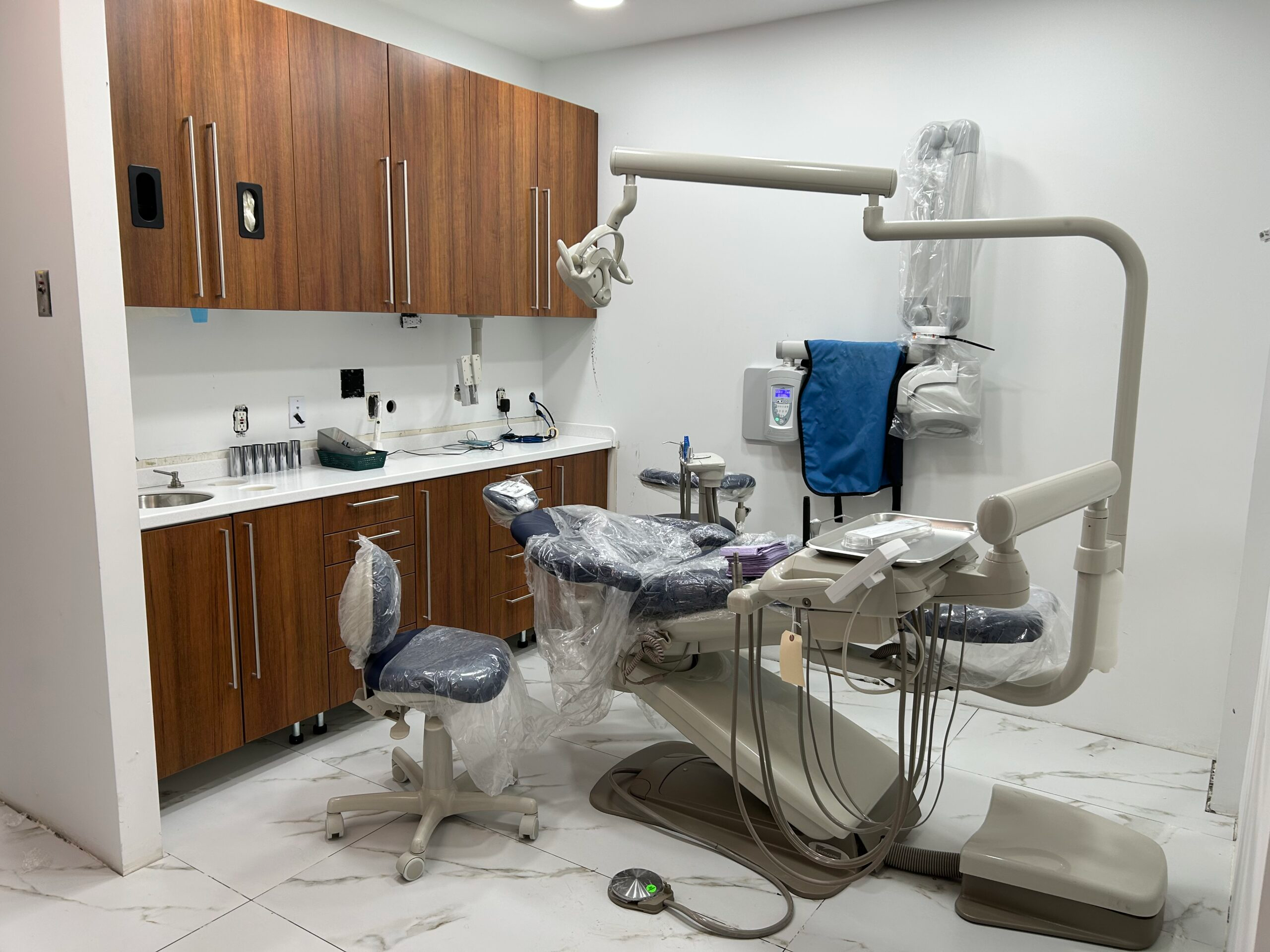
General contractors can frame walls and install flooring. What they typically cannot do is route a central air/water syringe system, properly slope a saliva ejector drain line, or position a dental unit to meet the ergonomic and workflow standards that A-dec, Midmark, or Planmeca require for warranty compliance. Our team at GCMM Dental Construction is manufacturer-trained by A-dec, Midmark, and Planmeca — meaning we don’t just build the room, we install and integrate the equipment inside it correctly the first time.
This matters enormously during a renovation. When you’re tearing into walls that already contain dental plumbing runs, nitrous oxide lines, or panoramic X-ray mounting points, a contractor who doesn’t understand how those systems work will cause costly mistakes. We’ve stepped into renovation projects across the Bronx, Westchester, Long Island, and New Jersey where a general contractor started work and quickly hit obstacles they didn’t anticipate — cracked PVC vacuum lines buried in concrete, improperly capped amalgam separator lines, or load-bearing walls that intersected with the planned operatory layout.
Our approach as specialized dental office contractors handling renovations is to conduct a thorough pre-construction assessment before a single wall is touched. That means reviewing existing MEP drawings (if available), identifying all active utility runs, and mapping the renovation scope around what’s already in the slab or ceiling — not around what we wish was there.
wp:image {“id”:1224}
/wp:image
Phased Construction: Renovating Without Closing Your Practice
For an operating dental practice, closing down entirely for a renovation isn’t financially realistic. A single operatory in a busy metro area practice can generate $1,500–$3,000 per day in collections. Shutting down four chairs for six weeks is a significant revenue hit — and it’s often unnecessary with proper phased construction planning.
Our standard approach for an operating practice renovation involves dividing the office into zones and sequencing work so that at least some treatment capacity remains active throughout the project. Here’s how a phased renovation typically works in practice:
- Phase 1 – Demolition and rough-in on inactive zones: We begin demolition in areas furthest from active treatment. Dust containment barriers (typically poly sheeting with negative air pressure) are installed to maintain infection control standards per CDC dental healthcare guidelines.
- Phase 2 – MEP rough-in and inspections: Plumbing, electrical, medical gas, and data rough-ins are completed in the first zone while the practice continues operating in the untouched area. Inspections are scheduled in advance to avoid delays.
- Phase 3 – Finish work and equipment installation in Zone 1: Once Zone 1 is complete and operational, patients shift to the new operatories while we begin demolition on Zone 2.
- Phase 4 – Repeat the cycle: This continues until the entire renovation is complete, typically without the practice losing more than 30–50% of its capacity at any single point.
We’ve executed this type of phased renovation in active practices across Manhattan, Flushing, and suburban Westchester locations — including a 7-operatory group practice in White Plains that completed a full suite upgrade without missing a single day of scheduling. The key is detailed pre-construction sequencing and a contractor who respects the operational reality of your business.
Selective Demolition Around Existing Dental Plumbing
One of the most technically sensitive aspects of a dental renovation is demolition. Dental offices contain utility infrastructure that is expensive to replace and, if damaged carelessly, can delay a project by weeks. Specifically:
- Vacuum system piping — typically PVC or ABS running in walls and under the slab, connected to a central vacuum pump. Cutting into a wall without locating these lines first can rupture a vacuum circuit that serves multiple operatories.
- Dental unit water supply and drain lines — each operatory has independent waterline supply (often with individual shutoff valves and inline filters) and a dedicated drain line that must maintain proper slope to avoid backflow and biofilm accumulation.
- Amalgam separators and waste lines — dental offices are subject to EPA amalgam rule compliance (40 CFR Part 441). Disrupting waste lines connected to amalgam separators without proper capping and documentation creates a regulatory and environmental liability.
- Nitrous oxide and oxygen lines — if the practice uses piped medical gas, these lines require NFPA 99 compliance and must be handled by qualified personnel only.
Our pre-demo protocol includes a utility marking walkthrough, review of original build drawings when available, and in older buildings — especially in the Bronx or legacy office spaces in New Jersey — physical probing to locate lines before any cutting begins. We’ve found undocumented gas lines in several renovation projects that previous owners simply capped and forgot about. Finding them before demo is far better than finding them during.
wp:image {“id”:1261}
/wp:image
Equipment Swap-Outs and Integrations During Renovation
Renovations are often the ideal time to upgrade aging dental equipment — and doing it as part of the construction project saves significant money compared to retrofitting later. Equipment swap-outs we commonly handle include:
- Replacing analog X-ray setups with digital radiography mounts and sensor-ready cabinetry
- Upgrading from traditional dental units to newer A-dec 500, Midmark 628, or Planmeca Sovereign configurations
- Removing ceiling-mounted delivery systems in favor of rear-delivery or side-delivery cart systems
- Replacing central vacuum and air compressor systems with compliant, properly sized modern units
- Installing panoramic and CBCT imaging rooms with proper shielding per state radiation control guidelines
Because we are manufacturer-trained by A-dec, Midmark, and Planmeca, we can coordinate equipment delivery, rough-in specifications, and final installation within the same construction project — eliminating the gap between the contractor who builds the room and the equipment rep who shows up weeks later to install a chair into a space that wasn’t framed correctly for it. For a deeper look at our full range of services, see our dental office buildout services, which covers both new construction and renovation equipment integration.
ADA Retrofit Compliance in Existing Dental Spaces
Any renovation that triggers a building permit — and almost all substantive dental renovations do — creates an ADA compliance obligation under the Americans with Disabilities Act. For older dental offices, especially those built before 1992 or those that have never been substantially renovated, this can mean significant retrofit work that wasn’t originally budgeted.
Common ADA retrofit requirements in dental office renovations include:
- Accessible route from parking or public right-of-way to the dental office entrance
- Doorway width compliance — operatory doors must provide at least 32 inches of clear opening, with 36 inches preferred
- Accessible restroom retrofits — grab bars, turning radius, proper fixture heights
- Reception counter height — at least a portion of the front desk must be lowered to 36 inches for wheelchair access
- Operatory layout clearances — minimum 60-inch turning diameter in at least one operatory
We work closely with our clients to identify which ADA requirements are triggered by their specific renovation scope and jurisdiction. In New York City, Local Law 58 adds additional accessibility requirements on top of federal ADA standards — something many out-of-state contractors working in NYC fail to account for.
wp:image {“id”:1260}
/wp:image
Real Scenarios: Adding Operatories and Dental Conversions
Scenario 1: Adding Two Operatories to an Existing Suite
A general dentist in Long Island City had a 1,400 SF practice with four operatories and an oversized private office and storage room taking up the back third of the suite. She wanted to convert that space into two additional operatories to accommodate a new associate and increase capacity. The project involved selective demolition of the storage room and private office walls, extension of the existing vacuum and air lines, new electrical circuits for two additional dental units, installation of two A-dec 500 chairs with our manufacturer-trained team, and a reconfiguration of the sterilization area to accommodate the higher patient volume. Total project time: 11 weeks with a 3-week partial shutdown of the rear portion only. The front four operatories never went offline.
Scenario 2: Converting a General Medical Office to Dental Use
A periodontist purchasing a practice space in Bergen County, NJ acquired a former general practitioner’s office that had never been used for dentistry. Converting it required installing a central vacuum system from scratch, running new waterline infrastructure to four operatory locations, installing a dental air compressor in the utility room, adding cabinetry specific to dental workflow, and upgrading the electrical panel to handle imaging equipment loads. Projects like this are why having a dental clinic renovation contractor with end-to-end experience matters — a general contractor would have needed multiple specialty subs and no single point of coordination. We managed the entire scope in-house.
Understanding Renovation Costs in the NYC Metro Area
Dental renovation costs vary significantly based on scope, existing conditions, and borough or county. In the NYC metro area, expect renovation costs to range from $80–$150 per square foot for light cosmetic updates with no MEP changes, to $200–$350+ per square foot for gut renovations or operatory additions that require full MEP rough-in. Equipment costs are separate and can add $25,000–$60,000 per operatory depending on chair model and delivery system. For a detailed breakdown specific to your location, see our guide on dental contractor costs for NYC, Long Island, and Westchester in 2026.
Frequently Asked Questions
How long does a typical dental office renovation take?
Scope varies, but a single-zone operatory addition typically takes 8–12 weeks from permit approval to final inspection. A full practice renovation of 2,000+ SF can run 16–24 weeks depending on permit timelines in your jurisdiction. NYC permitting can add 4–8 weeks to any project schedule — we factor this into every timeline we present to clients.
Do I need to close my practice during renovation?
Not necessarily. With proper phased construction planning, most operating practices can maintain 50–75% of their normal capacity throughout a renovation. Full closure is typically only required for very small single-suite practices with no ability to isolate construction zones.
What permits are required for a dental office renovation in New York?
Most dental renovations require a building permit for construction, separate MEP permits for plumbing and electrical, and DOH notification depending on the scope of change. In New York City, work must be filed with the NYC Department of Buildings. We handle permit filing and expediting for all projects in our service area.
Can you handle both the construction and equipment installation?
Yes — this is one of the primary advantages of working with GCMM Dental Construction. As manufacturer-trained installers for A-dec, Midmark, and Planmeca, we coordinate equipment procurement, delivery, rough-in, and final installation within a single project scope. You work with one team from demolition to the day you open.
Ready to Start Your Dental Office Renovation?
If you’re planning a renovation — whether it’s adding operatories, converting a space, or upgrading an aging practice — the best first step is a site walk with a contractor who actually understands dental construction. We serve practices across NYC, Westchester, Long Island, New Jersey, and Connecticut, and we’re available to visit your space, assess existing conditions, and give you a realistic picture of scope, timeline, and cost.
Call us at (347) 961-7357, email gary@gcmm.nyc, or visit us at 876 Kinsella St, Bronx, NY. You can also reach us through gcmmdentalconstruction.com. We don’t do generic proposals — every renovation estimate we provide is based on a real assessment of your specific space and goals.
Our team installs and integrates equipment from leading manufacturers including A-dec, ensuring builds operatory rooms to exact equipment specifications. We also provide commercial HVAC contractor through our parent company. Construction standards follow ADA dental office design guidelines.