
Book Appointment Now
Long Island Dental Office Renovation vs New Construction
Dental office renovation in Vs New Construction Long Island, NY. Modernize your practice with expert renovations. Manufacturer-certified. Call (347) 961-7357...
Long Island Dental Office Renovation vs New Construction
Looking for dental office renovation long island in Long Island? When expanding or upgrading your dental practice on Long Island, one of the most critical decisions you’ll face is whether to renovate an existing space or pursue new construction. As specialists in dental office construction at GCMM Dental Construction, we’ve helped hundreds of dentists across Long Island, from Nassau County to Suffolk County, navigate this complex decision. Each approach offers distinct advantages and challenges that can significantly impact your practice’s timeline, budget, and long-term success.
Professional Dental Office Renovation Long Island in Long Island
The choice between renovation and new construction isn’t just about initial costs—it’s about creating a space that serves your patients effectively while maximizing your investment. Our manufacturer-trained team works with A-dec, Midmark, and Planmeca equipment, giving us unique insight into how your space decision affects everything from plumbing layouts to electrical requirements for modern dental technology.
wp:image {“id”:1224}
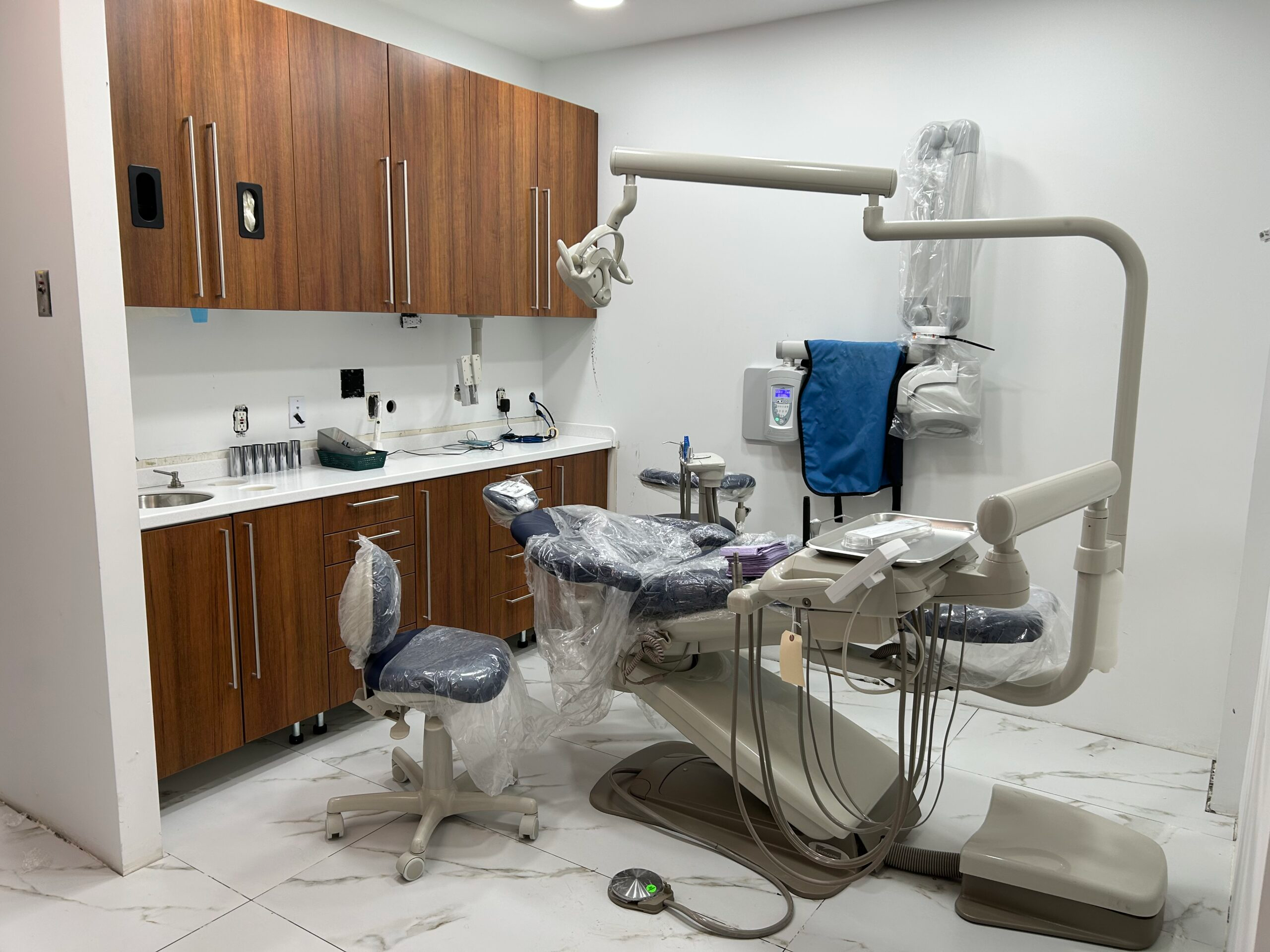
Our dental office renovation long island team in Long Island specializes in creating functional, code-compliant spaces tailored to your practice.
/wp:image
Cost Analysis: Renovation vs New Construction on Long Island
Understanding the true cost difference between dental office renovation and new construction requires examining both immediate expenses and long-term value. Based on our experience with projects across Long Island, renovation typically costs 30-50% less upfront than new construction, but this figure can be misleading depending on your specific requirements.
For dental office renovations, our projects typically range from $150-250 per square foot, depending on the existing infrastructure and scope of changes required. New construction projects generally fall between $300-450 per square foot for complete dental office buildouts. However, these numbers don’t tell the complete story—renovation costs can escalate quickly when dealing with outdated plumbing, electrical systems, or structural modifications needed for modern dental equipment.
We recently completed a 2,400 square foot renovation in Manhasset where the initial budget doubled due to unexpected plumbing relocations required for digital imaging equipment. Conversely, a new construction project in Huntington came in under budget because we could design the infrastructure specifically for the dentist’s equipment needs from the start. For detailed cost breakdowns specific to your project, consult our comprehensive dental contractor costs guide for Long Island, which includes current 2026 pricing for both renovation and new construction scenarios.
Hidden Costs in Renovation Projects
Renovation projects often encounter hidden costs that new construction avoids entirely. Asbestos remediation, common in buildings constructed before 1980, can add $15,000-30,000 to your budget. Lead paint removal, structural modifications for ADA compliance, and upgrading electrical panels for modern dental equipment are frequent surprises that impact both timeline and budget.
In Suffolk County, we’ve found that buildings from the 1960s-1980s often require complete HVAC system replacements to handle the air quality requirements of modern dental practices. These systems, essential for proper sterilization and patient comfort, can cost $25,000-40,000 beyond the initial renovation estimate.
Timeline Considerations for Long Island Dental Projects
Timeline differences between renovation and new construction significantly impact your practice’s cash flow and patient scheduling. New construction projects typically require 8-12 months from groundbreaking to patient care, while renovations often promise faster completion in 3-6 months. However, our experience shows that renovation timelines are far less predictable.
Permit approval processes vary significantly across Long Island municipalities. Nassau County’s permit reviews for new construction average 6-8 weeks, while renovation permits often receive approval in 3-4 weeks. However, renovation projects frequently encounter delays when inspectors discover code violations or structural issues that weren’t apparent during initial assessments.
wp:image {“id”:1223}
/wp:image
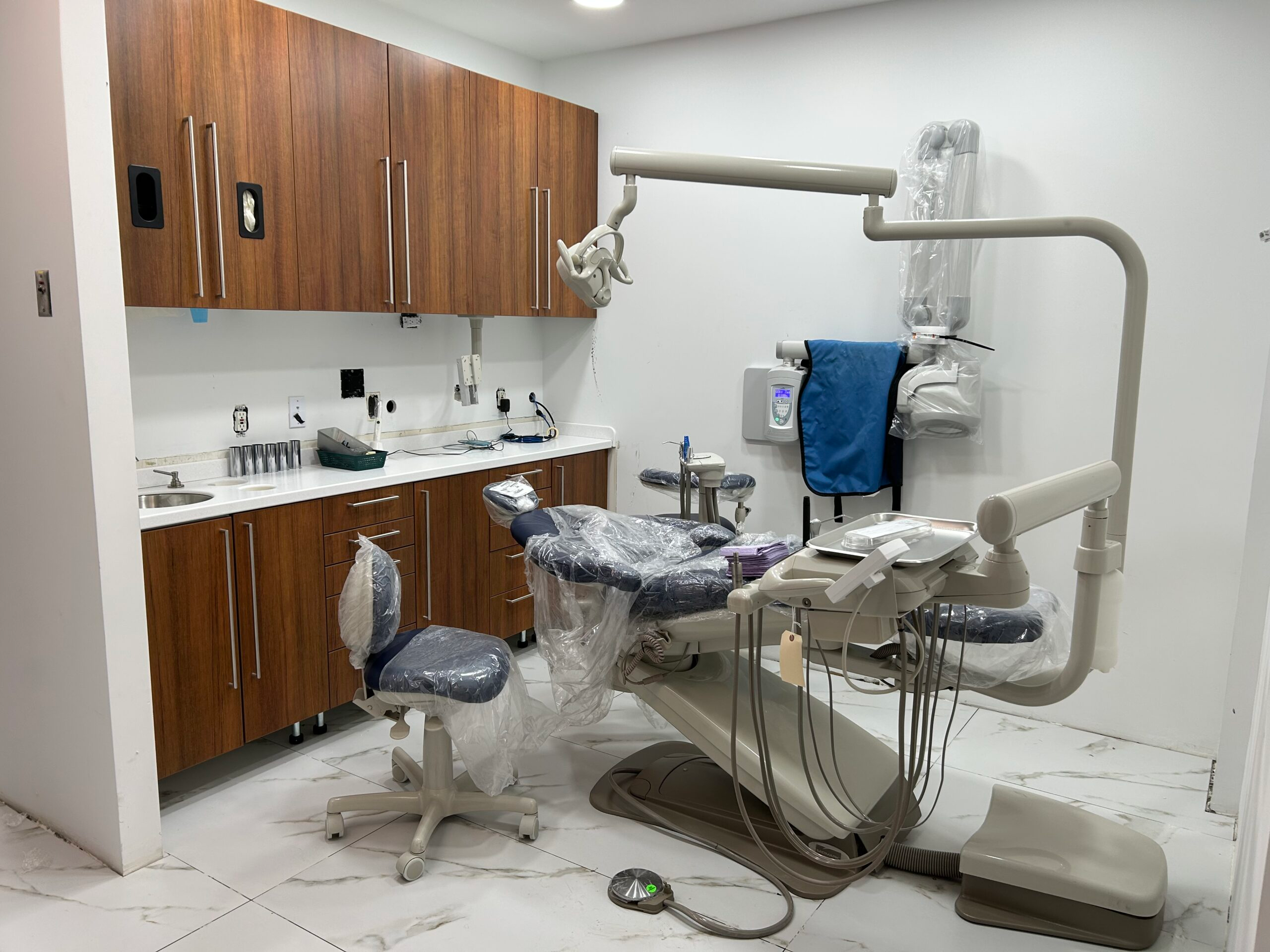
We completed a renovation project in Smithtown that was delayed four months due to structural modifications required for a panoramic X-ray unit installation. The existing concrete slab couldn’t support the equipment’s vibration requirements, necessitating extensive foundation work that wasn’t identified during initial planning. This type of surprise is virtually impossible with new construction, where we design foundations specifically for your equipment needs.
Permitting Differences Across Long Island
Each Long Island municipality has unique permitting requirements that affect project timelines. Brookhaven requires additional environmental impact assessments for new construction but offers streamlined processes for medical office renovations. Oyster Bay has implemented expedited permitting for healthcare facility improvements, reducing typical renovation approval times by 30%.
Our team maintains relationships with planning departments across Nassau and Suffolk counties, helping navigate these municipal differences efficiently. We’ve found that pre-application meetings, especially for new construction projects, can reduce overall permitting time by identifying potential issues before formal submission.
Design Flexibility and Future-Proofing Your Practice
Design flexibility represents one of the most significant advantages of new construction over renovation. When building from the ground up, we can position operatories for optimal workflow, design mechanical rooms for future equipment additions, and install electrical infrastructure that accommodates advancing dental technology.
Renovation projects must work within existing structural limitations that often compromise optimal layouts. We’ve renovated dozens of dental offices where load-bearing walls prevented ideal operatory positioning, or where existing plumbing locations forced suboptimal equipment placement. These compromises affect daily workflow efficiency and can impact your practice’s long-term profitability.
Modern dental practices require significantly more electrical capacity than offices from previous decades. Digital imaging systems, LED lighting, and advanced sterilization equipment demand robust electrical infrastructure. New construction allows us to install 400-amp electrical services with dedicated circuits for each operatory, while renovations often struggle to accommodate these requirements within existing electrical panels.
Technology Integration Considerations
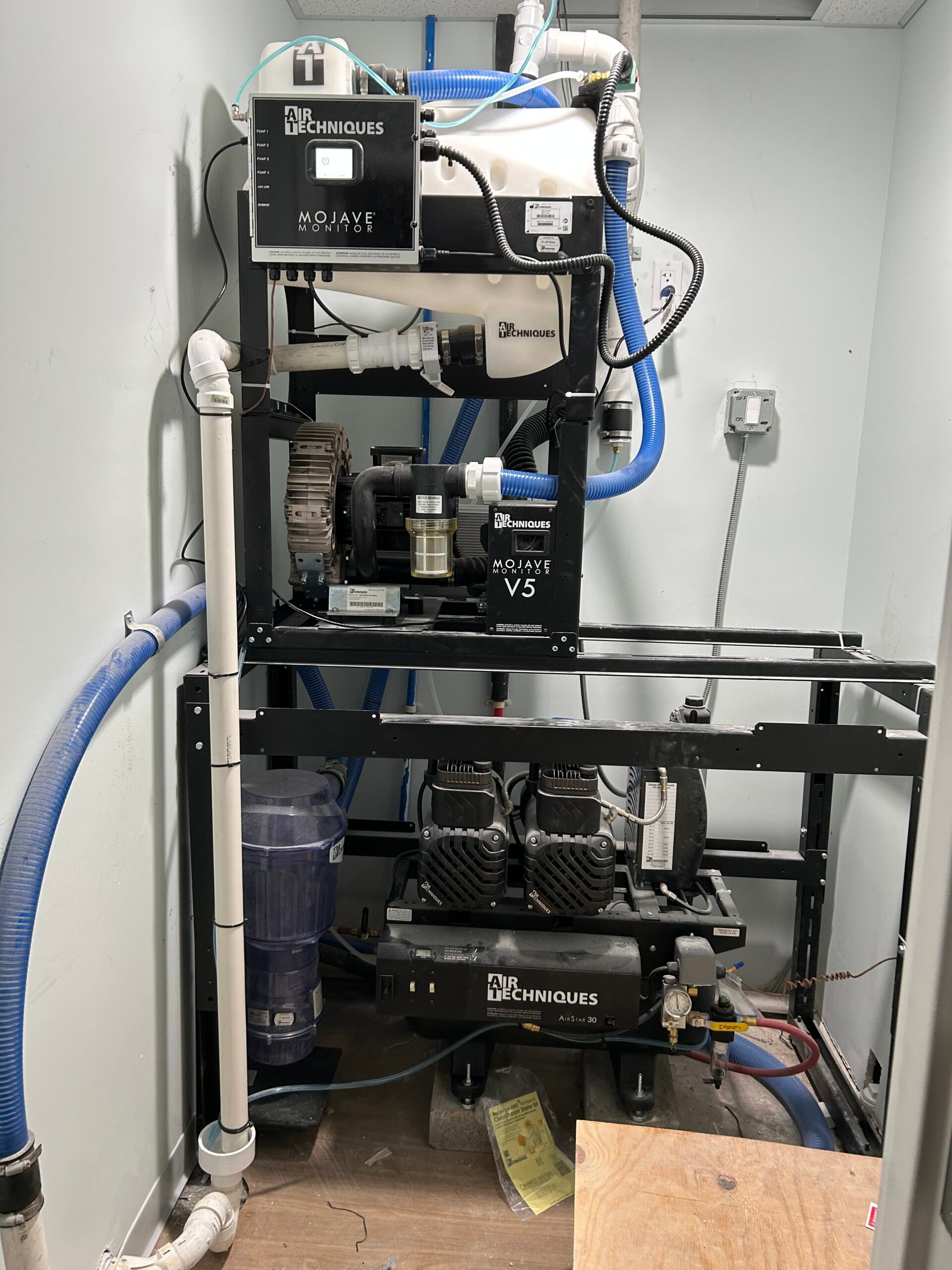
The integration of modern dental technology heavily favors new construction projects. Intraoral cameras, digital X-ray systems, and CAD/CAM equipment require specific mounting points, ventilation, and electrical requirements that are challenging to retrofit into existing spaces.
Our manufacturer training with A-dec, Midmark, and Planmeca equipment gives us detailed knowledge of installation requirements that influence space planning decisions. For instance, Planmeca’s ProMax 3D imaging systems require specific floor reinforcement and vibration isolation that’s easily incorporated into new construction but expensive to retrofit during renovations.
wp:image {“id”:1219}
/wp:image
Regulatory Compliance and ADA Requirements
ADA compliance requirements create significant differences between renovation and new construction approaches. New construction must meet current ADA standards throughout, while renovations have some flexibility under “path of travel” regulations. However, major renovations often trigger full compliance requirements that can substantially increase project scope and cost.
We regularly encounter renovation projects where bathroom modifications, corridor widening, or entrance ramp installations become mandatory once the renovation scope exceeds 20% of the building’s value. These requirements can transform a simple operatory update into a comprehensive facility overhaul.
Working with our experienced dental office contractors ensures that compliance requirements are identified early in the planning process, preventing costly mid-project changes. Our team’s extensive experience with Long Island building codes helps navigate the complex intersection of ADA requirements, local building codes, and dental practice regulations.
Location and Market Considerations
Long Island’s competitive dental market makes location selection crucial for practice success. Renovation projects are limited to existing buildings, which may not offer optimal visibility, parking, or accessibility. New construction provides complete control over site selection, allowing you to choose locations based on demographic analysis and competition mapping.
Prime retail locations in towns like Garden City, Manhasset, or East Hampton rarely have suitable existing spaces for dental practices. These areas often require new construction to secure the visibility and accessibility that drive patient acquisition. Conversely, established medical complexes in areas like Melville or Hauppauge offer renovation opportunities within proven healthcare environments.
Parking requirements vary significantly across Long Island municipalities, with some requiring one space per 200 square feet of medical office space. New construction projects can incorporate parking planning from the beginning, while renovations must work within existing parking availability that may not meet current codes.
Making the Decision: Key Factors to Consider
Your decision between renovation and new construction should align with your practice’s specific goals, timeline, and budget constraints. Consider renovation when you’ve found an ideal location with existing infrastructure that supports your equipment needs, when timeline pressure requires faster occupancy, or when budget limitations make new construction prohibitive.
Choose new construction when optimal workflow is crucial for your practice model, when you require specific equipment that demands custom infrastructure, or when long-term growth plans require maximum design flexibility. Our experience with dental practice construction across Long Island shows that new construction typically provides better long-term value despite higher upfront costs.
Practice Growth Considerations
Consider your five and ten-year growth projections when making this decision. New construction can incorporate expansion planning from the beginning, with shell space for future operatories and infrastructure sized for growth. Renovation projects often constrain future expansion options due to property boundaries and structural limitations.
Multi-doctor practices particularly benefit from new construction’s flexibility to design collaborative workflows and shared support areas that maximize efficiency. Single-doctor practices may find renovation more cost-effective, especially when the existing space layout supports efficient patient flow.
Environmental and Sustainability Factors
Sustainability considerations increasingly influence dental office construction decisions. New construction allows incorporation of energy-efficient systems, LED lighting, and sustainable materials from the beginning. Modern dental offices can achieve significant utility savings through proper insulation, efficient HVAC systems, and energy-management systems that control equipment power consumption.
Renovation projects can improve energy efficiency but are limited by existing building envelopes and system configurations. However, renovation inherently supports sustainability by repurposing existing structures rather than creating construction waste from demolition.
Long Island’s high utility costs make energy efficiency particularly important for operational expenses. We’ve designed new construction projects that reduce utility costs by 40-50% compared to older buildings, often justifying the additional construction investment through operational savings.
Working with GCMM Dental Construction
Whether you choose renovation or new construction, success depends on working with contractors who understand dental practice requirements. Our team’s manufacturer training with leading dental equipment companies ensures that your space will support efficient operations and future technology upgrades.
We provide comprehensive project management from initial planning through final inspection, handling permitting, coordinating trades, and ensuring ADA compliance throughout the process. Our experience across Long Island gives us detailed knowledge of municipal requirements and local building conditions that affect project success.
For expert guidance on your Long Island dental office renovation or new construction project, contact our team at (347) 961-7357. We’ll evaluate your specific needs, site conditions, and budget to recommend the approach that best serves your practice goals. You can also reach us at gary@gcmm.nyc to discuss your project requirements and schedule a consultation.
Ready to transform your dental practice? Our comprehensive Long Island dental office renovation guide provides additional insights into creating efficient, profitable dental spaces that serve your patients effectively while supporting your practice growth objectives.
As a manufacturer-trained contractor with certification from A-dec, GCMM builds operatory rooms to exact equipment specifications. For broader commercial construction needs, our parent company GCMM Home Improvement provides commercial HVAC contractor. All projects follow ADA dental office design guidelines.