
Book Appointment Now
Dental Office Plumbing Requirements Long Island Renovations
Dental Office Plumbing Requirements Long Island Renovations. Expert insights from GCMM Dental Construction. Call (347) 961-7357 for your project.
Dental Office Plumbing Requirements Long Island Renovations
Looking for dental office plumbing requirements long island in Long Island? When planning dental office renovations on Long Island, understanding specialized plumbing requirements is crucial for successful project completion. Our team at GCMM Dental Construction has completed hundreds of dental office buildouts across Nassau and Suffolk Counties, and we’ve learned that dental-specific plumbing systems require expertise that goes far beyond standard commercial plumbing installations.
Professional Dental Office Plumbing Requirements Long Island in Long Island
Dental practices have unique water quality demands, specialized drainage needs, and strict regulatory compliance requirements that must be addressed during renovation projects. From amalgam separators to specialized vacuum systems, every component must meet both New York State health department regulations and local Long Island building codes.
Understanding Dental Office Water Quality Standards
Dental procedures require exceptionally clean water systems that meet CDC guidelines for dental treatment water. Our installations on Long Island consistently address the challenge of achieving less than 500 CFU/mL of heterotrophic bacteria in dental unit waterlines. This requires specialized filtration systems, antimicrobial treatments, and regular maintenance protocols.
We install dedicated water treatment systems that typically include sediment filters, carbon filtration, and UV sterilization components. In our Syosset and Huntington projects, we’ve found that Long Island’s naturally hard water requires additional softening systems to prevent mineral buildup in delicate dental equipment. The water pressure must be maintained between 20-80 PSI to ensure proper operation of dental chairs, handpieces, and ultrasonic scalers.
wp:image {“id”:1224}
/wp:image
Temperature control is equally critical. We design systems that deliver water at consistent temperatures between 68-72°F to patient treatment areas, while providing heated water up to 140°F for instrument processing areas. This dual-temperature approach requires careful planning of hot water distribution systems and often necessitates point-of-use water heaters in sterilization areas.
Specialized Drainage Systems for Dental Practices
Dental office drainage systems must handle unique waste streams that standard commercial buildings never encounter. Operatory sinks receive a mixture of blood, saliva, dental materials, and cleaning chemicals that require specialized waste management approaches. Our dental office plumbing installations incorporate oversized drain lines with proper slope calculations to prevent blockages from amalgam particles and other dental waste.
Each operatory requires dedicated drainage that connects to the building’s waste system through properly sized pipes. We typically install 2-inch minimum drain lines for cuspidors and 3-inch lines for areas receiving high-volume irrigation. The drainage system must also accommodate emergency eyewash stations and safety showers in areas where chemical processing occurs.
Vacuum system waste lines present additional challenges. High-volume evacuation systems generate substantial amounts of liquid waste mixed with solid particles. Our installations include dedicated wet-ring vacuum pump drainage with proper venting to prevent sewer gas infiltration. These systems require regular maintenance access, so we design removable floor sections or accessible wall chases in mechanical areas.
Amalgam Separator Compliance Requirements
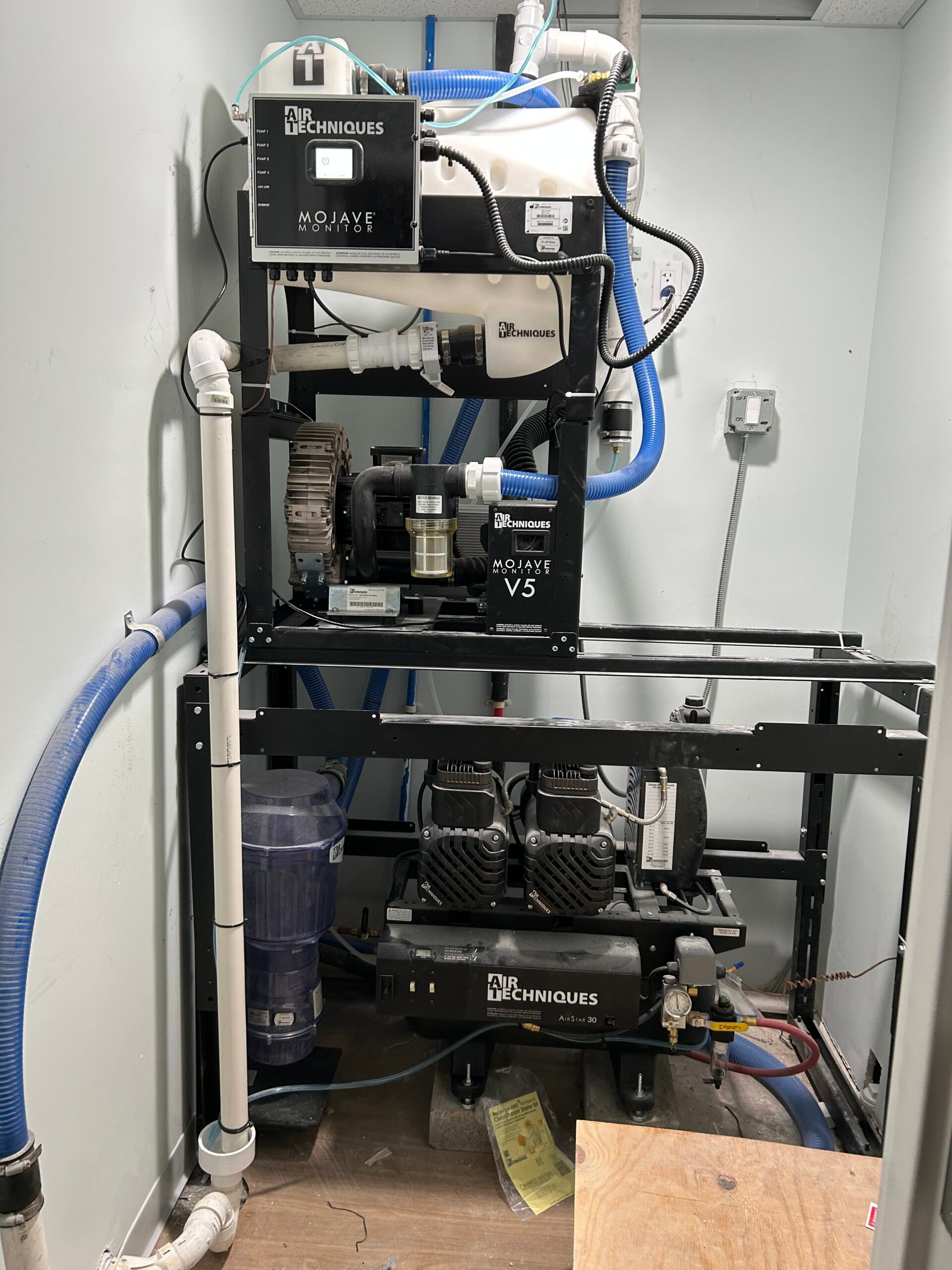
New York State regulations mandate amalgam separator installation in all dental practices that place or remove amalgam restorations. Our team ensures full compliance with EPA requirements for amalgam waste management through proper separator sizing, installation, and maintenance planning.
Amalgam separators must achieve 95% efficiency in removing amalgam particles from wastewater. We select ISO 11143-certified separators sized according to the number of operatories and expected patient volume. For typical Long Island dental practices with 4-6 operatories, we install separators capable of processing 200-400 gallons per day with automatic backwash capabilities.
wp:image {“id”:1223}
/wp:image
Installation requires careful attention to bypass capabilities for non-amalgam waste streams. Sterilization area sinks, staff restrooms, and laboratory sinks should not discharge through the amalgam separator. We design separate waste lines for these areas to prevent unnecessary wear on separator components and ensure optimal performance for amalgam-containing waste.
Maintenance access is critical for separator compliance. We design installations with adequate clearance for filter replacement and waste container removal. Most Long Island health departments require annual separator servicing records, so we provide detailed maintenance schedules and contractor recommendations to ensure ongoing compliance.
Long Island Plumbing Code Compliance
Nassau and Suffolk County plumbing codes incorporate New York State standards with local amendments that affect dental office installations. Our team maintains current relationships with local building departments in Hempstead, Oyster Bay, Babylon, and other Long Island municipalities to ensure smooth permit approval processes.
Backflow prevention requirements are particularly stringent for dental offices. We install reduced pressure zone assemblies on main water service lines and individual dual check assemblies on equipment connections. These devices require annual testing by certified technicians, and we coordinate initial testing and provide ongoing maintenance contractor referrals.
Fixture unit calculations for dental offices differ significantly from standard commercial applications. Dental chairs typically require 3 fixture units each, while high-volume evacuation systems add additional load calculations. We perform detailed hydraulic calculations to ensure adequate water pressure throughout the facility, particularly in multi-story buildings where pressure loss can affect equipment performance.
Equipment-Specific Plumbing Connections
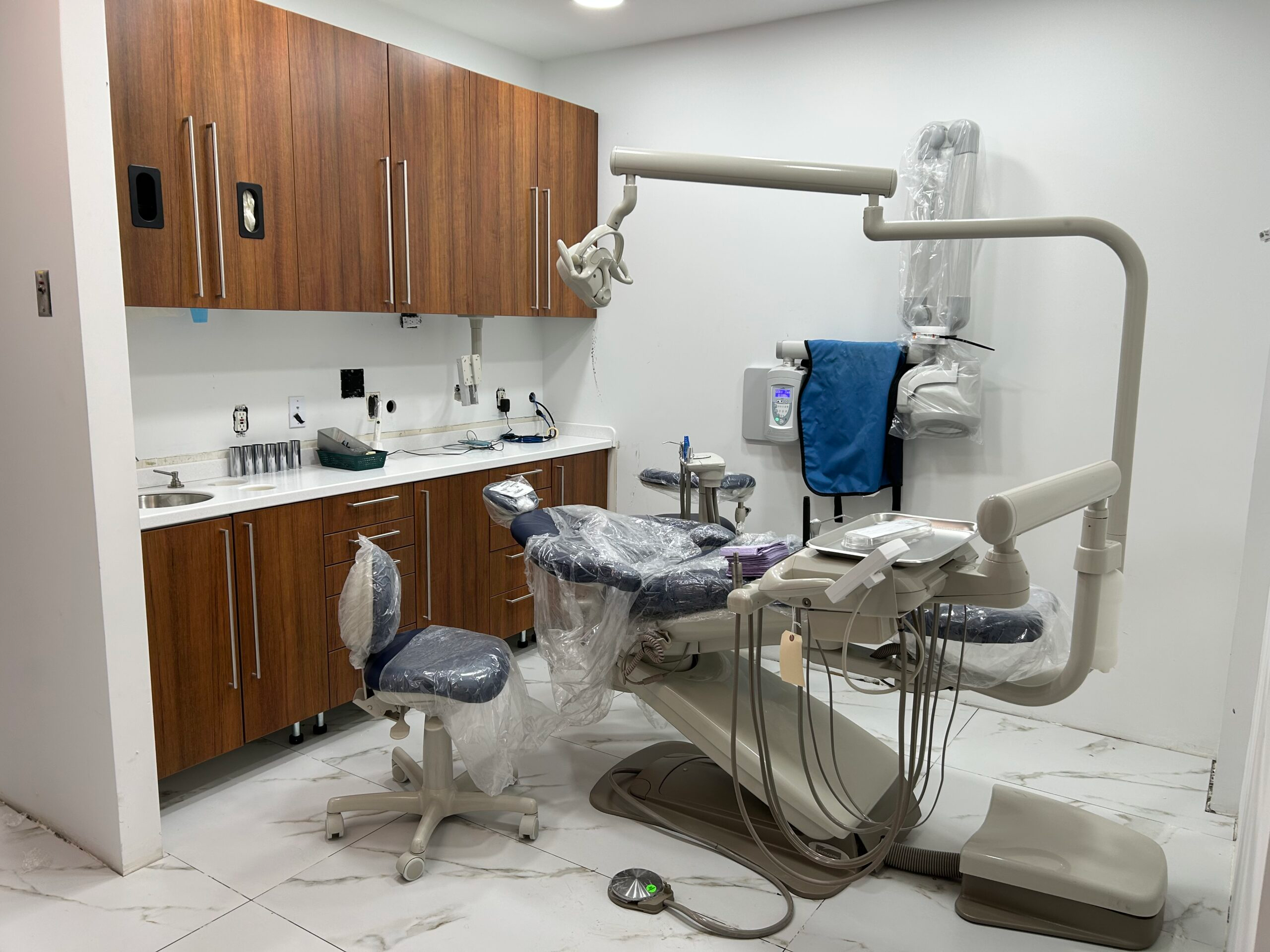
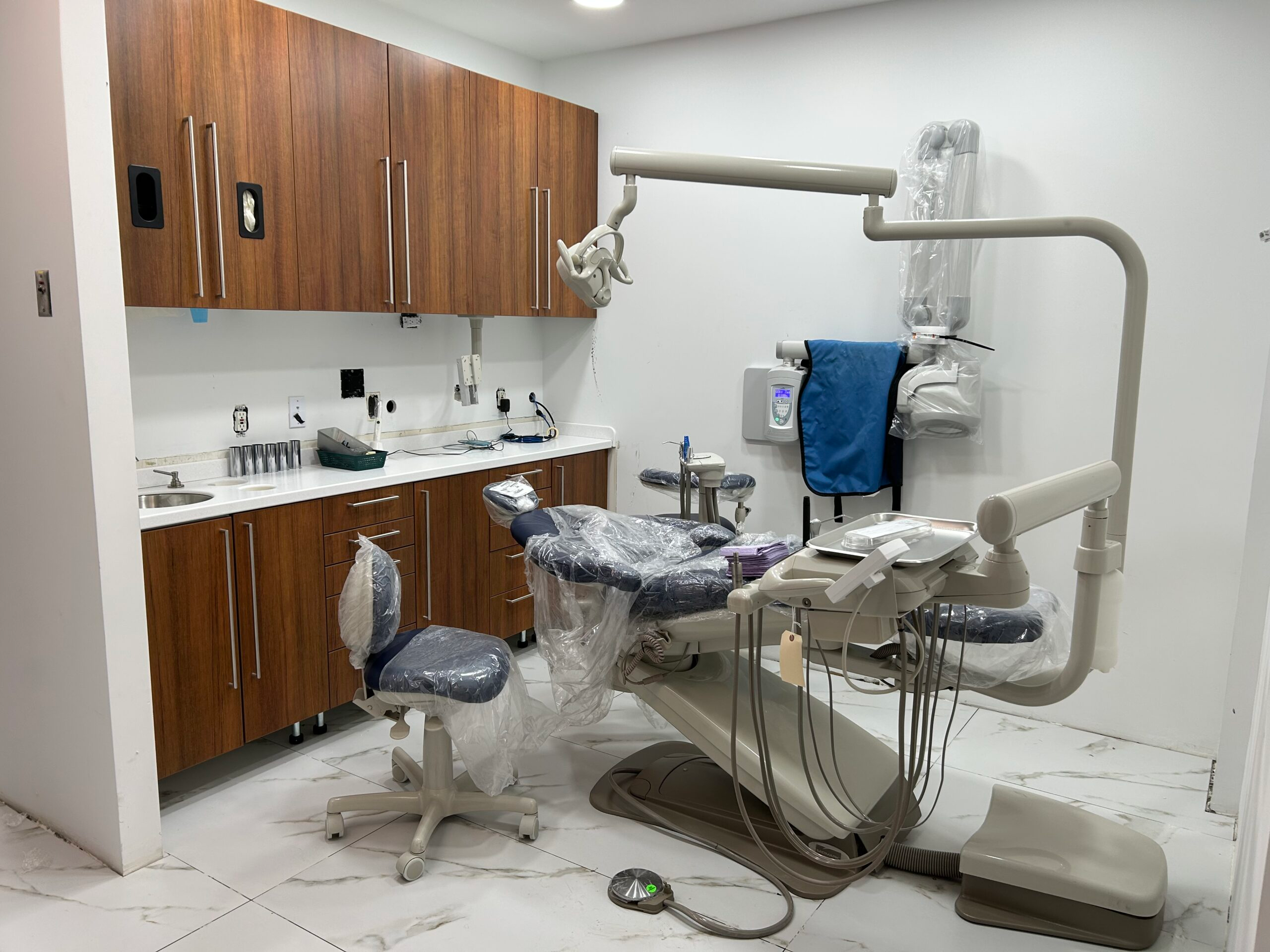
Our manufacturer training with A-dec, Midmark, and Planmeca provides detailed knowledge of equipment-specific plumbing requirements. Each manufacturer has unique connection specifications for water supply, drainage, and compressed air systems that must be followed precisely to maintain equipment warranties.
A-dec dental chairs require 1/2-inch water supply lines with shut-off valves accessible for maintenance. Water pressure must be regulated to 45 PSI maximum to prevent internal component damage. Drainage connections require P-traps with 1-1/2-inch minimum diameter and proper venting to prevent siphoning of cuspidor bowl seals.
wp:image {“id”:1219}
/wp:image
Midmark equipment often incorporates integrated water filtration systems that require specific installation procedures. Supply lines must include bypass capabilities for filter replacement without shutting down the entire operatory. We install quarter-turn ball valves and union connections to facilitate maintenance while minimizing disruption to practice operations.
Planmeca imaging equipment requires specialized cooling water systems with recirculation capabilities. These systems generate substantial heat loads and require dedicated drainage for cooling water discharge. Temperature monitoring systems alert staff to cooling system failures that could damage expensive imaging equipment.
Sterilization and Laboratory Area Requirements
Sterilization areas require hot and cold water supplies capable of delivering consistent temperatures for proper instrument processing. We install mixing valves that maintain 180°F water for sterilizer operations while providing tempered water for staff safety. Steam sterilizers require dedicated drainage with appropriate temperature ratings and condensate handling capabilities.
Laboratory areas often require specialized sinks with acid-resistant materials for crown and bridge work. We install epoxy resin or stainless steel sinks with chemical-resistant drainage systems. Plaster traps prevent gypsum and stone particles from entering drainage systems where they can cause serious blockages.
Emergency equipment installations include eyewash stations with tepid water mixing valves and safety showers where required by OSHA standards. These installations require dedicated water supplies with bypass capabilities to ensure availability during emergencies while allowing normal maintenance of building water systems.
Cost Considerations for Long Island Projects
Dental office plumbing installations typically cost 15-25% more than standard commercial plumbing due to specialized equipment requirements and regulatory compliance needs. Our dental contractor costs reflect the additional expertise and specialized components required for proper installations.
Amalgam separator systems add $3,000-$8,000 to project costs depending on practice size and local installation requirements. Water treatment systems range from $2,000-$12,000 based on equipment specifications and Long Island’s specific water quality challenges. These investments provide long-term value through equipment protection and regulatory compliance.
Permit fees and inspection costs on Long Island vary by municipality but typically range from $800-$2,500 for dental office plumbing installations. Our team handles all permit applications and coordinates inspections to ensure timely project completion without costly delays.
Working with GCMM Dental Construction
Our experience with dental office contractors throughout Long Island ensures proper coordination between plumbing installations and other construction activities. We understand how plumbing rough-in affects electrical installations, HVAC systems, and equipment placement to minimize conflicts and change orders.
As part of our comprehensive renovation requirements guide, we provide detailed plumbing specifications that address all aspects of dental-specific installations. Our project management approach ensures all regulatory requirements are met while maintaining efficient construction schedules.
From our base in the Bronx at 876 Kinsella St, our team serves dental practices throughout Nassau and Suffolk Counties. We understand local code requirements, permit processes, and inspection procedures that ensure smooth project completion. Contact us at (347) 961-7357 or gary@gcmm.nyc to discuss your dental office plumbing requirements.
Frequently Asked Questions
How long does dental office plumbing installation take?
Complete dental office plumbing installations typically require 2-4 weeks depending on practice size and complexity. Rough-in work occurs during early construction phases, while equipment connections happen after flooring and cabinetry installation. We coordinate closely with other trades to minimize schedule impacts.
Can existing plumbing be reused in dental office renovations?
Existing plumbing can sometimes be adapted for dental use, but most installations require significant modifications to meet dental-specific requirements. Water quality systems, drainage modifications, and amalgam separator installations typically require new plumbing infrastructure even in renovation projects.
What maintenance is required for dental office plumbing systems?
Dental office plumbing requires more frequent maintenance than standard commercial systems. Water treatment systems need filter replacements every 3-6 months, amalgam separators require annual servicing, and backflow preventers need annual testing. We provide maintenance schedules and contractor referrals for ongoing system care.
Ready to start your Long Island dental office renovation? Contact GCMM Dental Construction at (347) 961-7357 to discuss your specialized plumbing requirements and ensure your project meets all regulatory standards while supporting efficient practice operations.
With factory certification from A-dec, our team builds operatory rooms to exact equipment specifications. GCMM also offers commercial HVAC contractor for non-dental commercial projects. All work meets ADA dental office design guidelines.