
Book Appointment Now
Long Island Dental Office ADA Compliance Renovation
Dental office renovation in Ada Compliance Long Island, NY. Modernize your practice with expert renovations. Manufacturer-certified. Call (347) 961-7357 for ...
Long Island Dental Office ADA Compliance Renovation
Looking for ada compliance dental office renovation long island in Long Island? ADA compliance in dental office renovations isn’t just a legal requirement—it’s essential for creating an inclusive practice that serves all patients effectively. At GCMM Dental Construction, we’ve completed hundreds of ADA-compliant renovations across Long Island, from Hempstead to Huntington, and understand the specific challenges dental practices face when upgrading their facilities to meet current accessibility standards.
Professional ADA Compliance Dental Office Renovation Long Island in Long Island
Our manufacturer-trained team specializes in navigating the complex intersection of ADA requirements and dental-specific construction needs. Whether you’re renovating a century-old building in Garden City or updating a 1980s practice in Melville, we ensure every aspect of your renovation meets both federal accessibility guidelines and optimal patient care standards.
Understanding ADA Requirements for Dental Practices
The Americans with Disabilities Act established specific requirements for healthcare facilities that go beyond general commercial spaces. Dental offices must accommodate patients with mobility devices, visual impairments, and hearing disabilities while maintaining the specialized equipment and workflow requirements of modern dentistry.
Our ada compliance dental office renovation long island team in Long Island specializes in creating functional, code-compliant spaces tailored to your practice.
Key ADA compliance areas for dental renovations include:
- Accessible entrance and exit routes
- Parking space allocation and specifications
- Doorway widths and hardware accessibility
- Reception and waiting area accessibility
- Restroom facilities compliance
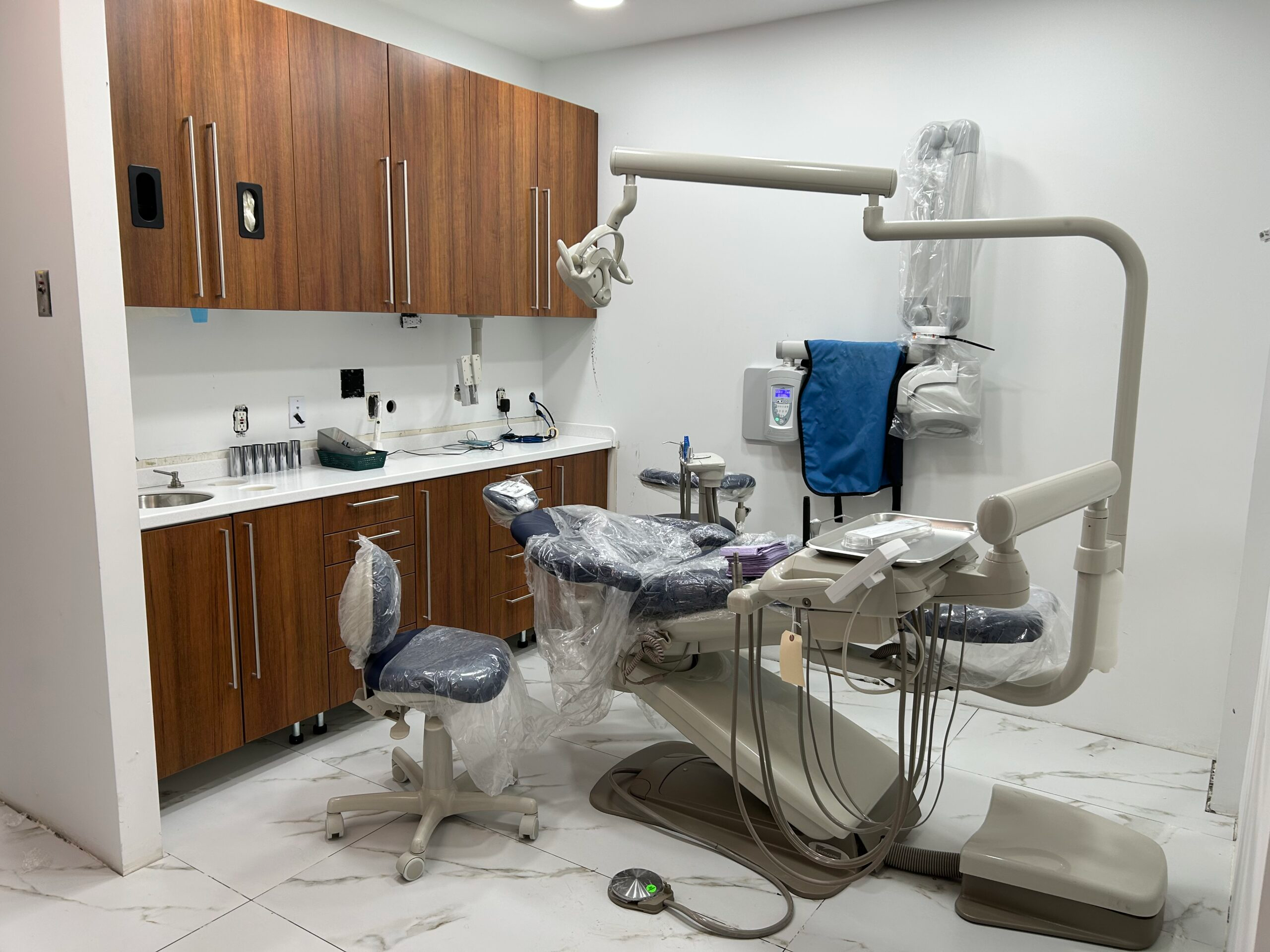
- Operatory accessibility for wheelchair users
- Communication accessibility features
Our experience with ADA dental compliance construction has shown that early planning prevents costly mid-project modifications and ensures seamless integration of accessibility features.
wp:image {“id”:1224}
/wp:image
Doorway and Entrance Specifications
Proper doorway specifications are critical in dental office renovations. ADA standards require a minimum clear width of 32 inches when doors are open at 90 degrees, but we recommend 36-inch doors wherever possible to accommodate larger wheelchairs and mobility devices comfortably.
Door hardware must be operable with a closed fist and positioned between 34 and 48 inches from the floor. Lever handles are preferred over knobs, and automatic door operators should be considered for main entrances, especially in high-traffic practices.
Maneuvering clearances present unique challenges in dental offices where space is at a premium. Pull-side clearances require 18 inches minimum on the latch side, while push-side clearances need 12 inches. In Long Island practices with limited square footage, we often recommend pocket doors or sliding doors to maximize usable space while maintaining accessibility.
Threshold heights cannot exceed ½ inch for exterior doors and ¼ inch for interior doors, with beveled edges required for thresholds over ¼ inch. This is particularly important when renovating older Long Island buildings where floor height variations are common.
Accessible Bathroom Requirements
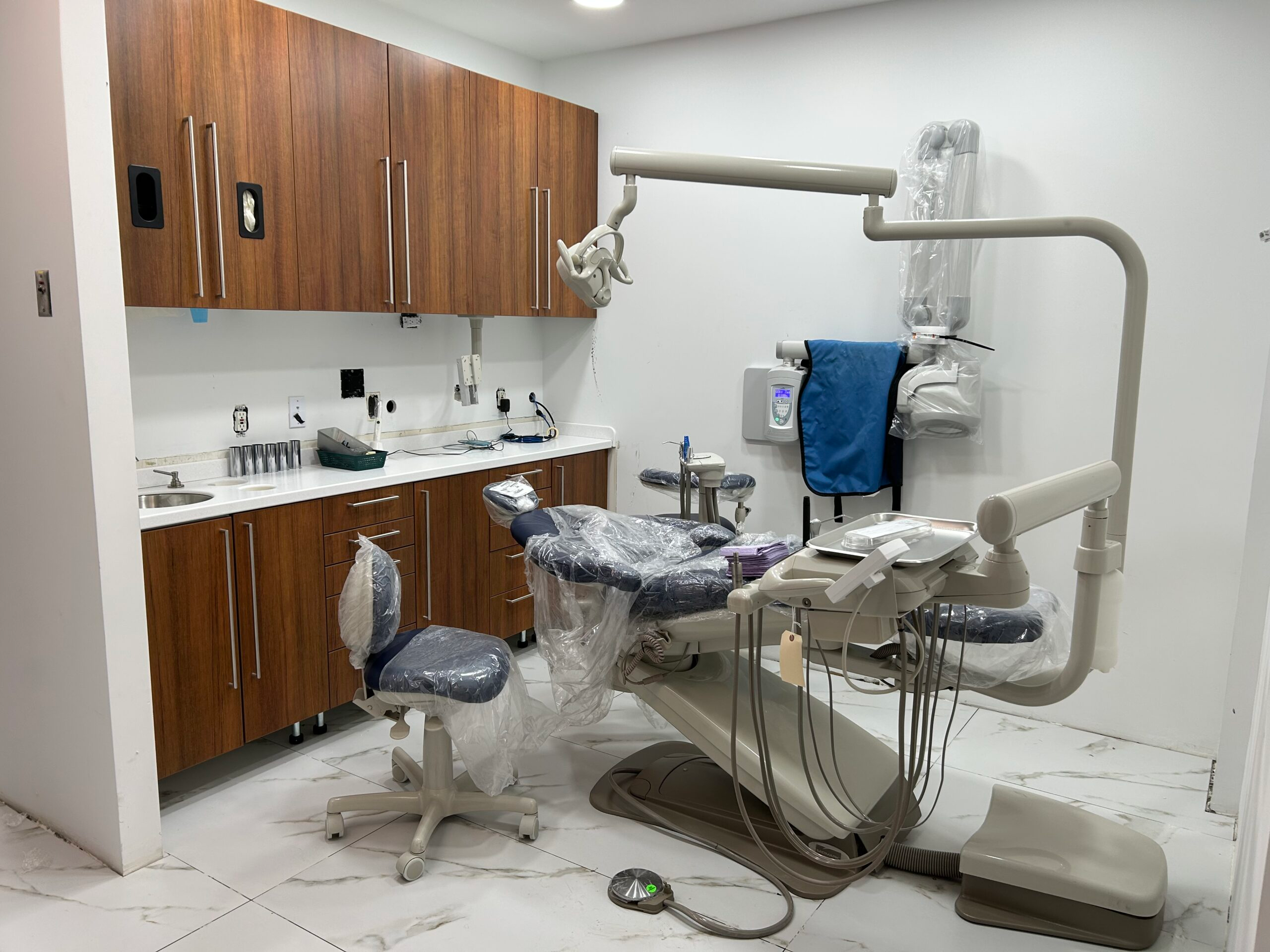
Dental office restrooms must meet stringent ADA requirements that differ significantly from residential standards. Clear floor space of 30 by 48 inches minimum must be provided in front of all fixtures, with specific positioning requirements for toilets, sinks, and accessories.
Toilet placement requires the centerline to be exactly 16-18 inches from side walls, with grab bars positioned at specific heights and distances. Wall-hung toilets often provide better clearance but require reinforced framing that we integrate during the construction phase.
Sink specifications include maximum rim heights of 34 inches, knee clearance of 27 inches minimum, and toe clearance extending 17-19 inches deep. Faucet controls must be automatic or lever-operated, positioned no higher than 44 inches from the floor.
Mirror placement, paper towel dispensers, and soap dispensers all have specific height and reach range requirements. We maintain detailed checklists for each bathroom component to ensure nothing is overlooked during installation.
wp:image {“id”:1223}
/wp:image
Parking Considerations for Long Island Practices
Accessible parking requirements vary based on total parking spaces provided. For most dental practices, one accessible space per 25 total spaces is required, with a minimum of one accessible space regardless of total count.
Standard accessible spaces must be 96 inches wide with 60-inch access aisles, while van-accessible spaces require 132 inches width with 96-inch access aisles. Access aisles can be shared between two spaces, effectively reducing the total width requirement.
Surface specifications require stable, firm, and slip-resistant materials with slopes not exceeding 1:48 (2.08%). Many Long Island practices deal with challenging topography that requires careful grading and drainage planning to achieve compliant slopes.
Signage must include the International Symbol of Accessibility, with van spaces including “Van Accessible” designation. Signs must be mounted 60 inches minimum above ground level and cannot be obscured by parked vehicles.
Reception and Waiting Area Accessibility
Reception counters present unique challenges in dental offices where HIPAA privacy requirements intersect with accessibility needs. ADA standards require at least one section of counter to be no higher than 36 inches, with knee space underneath for wheelchair users.
Alternative solutions include lowered sections of counter, portable writing surfaces, or clipboards for forms completion. We often design dual-height reception counters that accommodate both standing and seated patients while maintaining visual privacy for sensitive communications.
Waiting area seating must include wheelchair spaces equal to 5% of total seats, with a minimum of one space. These areas require 30 by 48 inches of clear floor space and cannot overlap with required circulation paths.
Fixed seating arrangements must include accessible options, while movable seating provides flexibility for varying patient needs. Our team designs waiting areas that feel cohesive while incorporating required accessibility features seamlessly.
Communication Accessibility Features
Visual notification systems are required in areas where audible alarms exist, using strobe lights with specific flash rates and intensity requirements. This is particularly important in dental operatories where hearing protection or procedures may limit auditory perception.
Assistive listening systems must be provided when audio amplification systems are used. While not common in most dental practices, practices with educational components or large waiting areas may require these accommodations.
wp:image {“id”:1219}
/wp:image
Operatory Accessibility Considerations
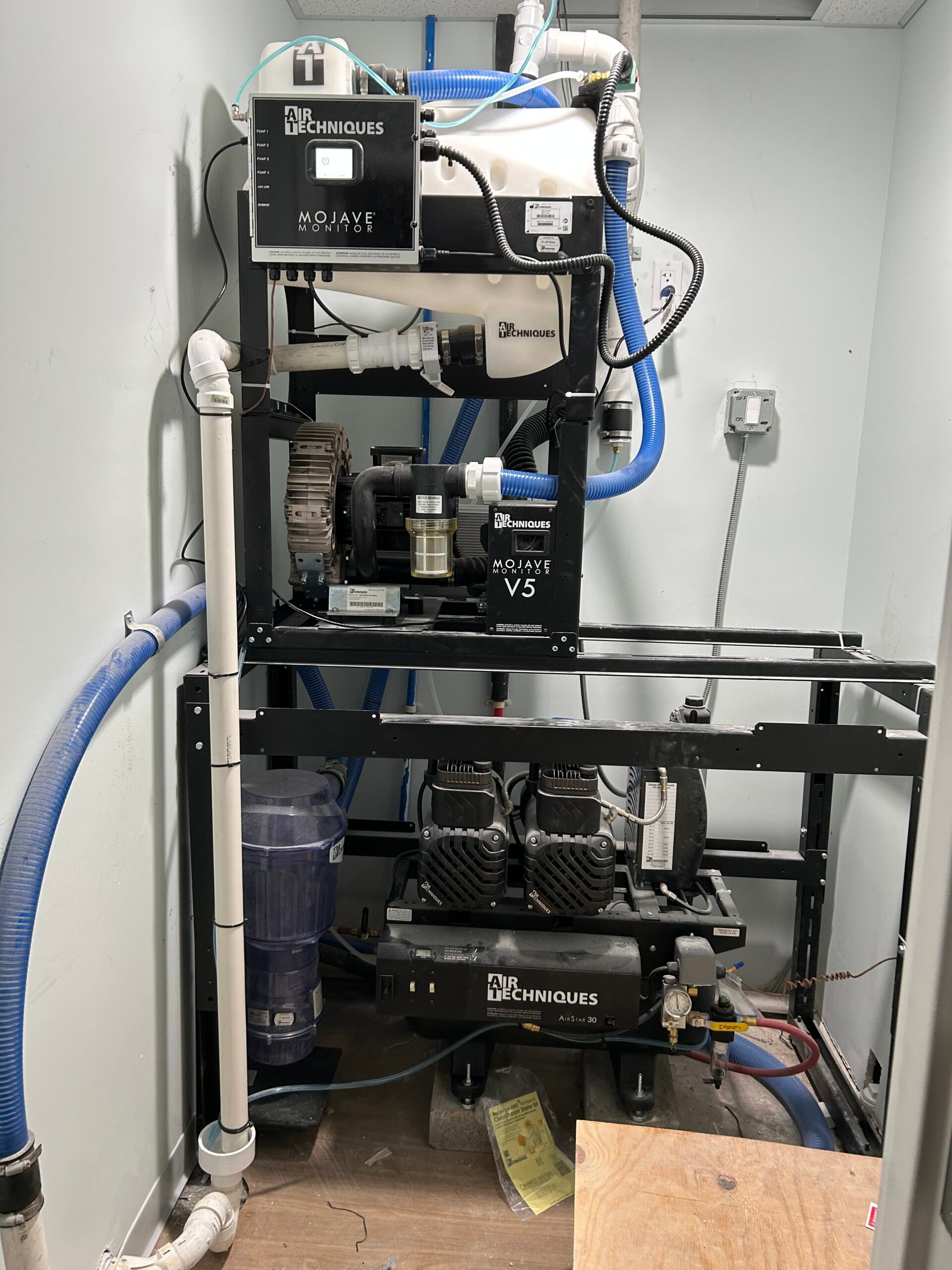
Dental operatories present unique accessibility challenges due to specialized equipment requirements and space constraints. While not every operatory must be fully accessible, practices should have at least one operatory capable of accommodating wheelchair users comfortably.
Clear floor space requirements of 30 by 48 inches must be maintained for wheelchair maneuvering, which can be challenging with dental chairs, delivery units, and assistant stools. We work closely with A-dec, Midmark, and Planmeca equipment to optimize layouts that meet both accessibility and workflow requirements.
Transfer surfaces, including dental chairs with removable arms or specialized transfer capabilities, may be necessary for patients who cannot transfer independently. Some dental chair models offer enhanced accessibility features that we can integrate during renovation planning.
Our manufacturer training with leading dental equipment companies ensures we understand which configurations work best for accessible operatory design without compromising clinical functionality.
Common Compliance Issues and Solutions
Through years of dental practice construction across Long Island, we’ve identified recurring compliance challenges and developed proven solutions for each.
Insufficient door widths are common in older buildings. Solutions include widening openings, installing offset hinges for additional clearance, or redesigning layouts to accommodate standard door sizes.
Inadequate bathroom space often requires expanding into adjacent areas or relocating bathrooms entirely. We’ve successfully converted storage closets, relocated walls, and even annexed portions of adjacent rooms to create compliant facilities.
Parking challenges in dense Long Island locations may require creative solutions including shared parking agreements with adjacent properties, valet services, or alternative transportation accommodations.
Historic building constraints can limit modification options. We work with local building departments to identify acceptable alternatives that maintain historical integrity while achieving maximum accessibility.
Cost Considerations and Planning
ADA compliance modifications vary significantly in cost depending on existing conditions and required changes. Our comprehensive renovation compliance guide includes detailed cost breakdowns for typical accessibility upgrades.
Budget planning should account for structural modifications, specialized fixtures, and potential code upgrades triggered by renovation scope. Early accessibility assessment prevents surprise costs and allows for value engineering opportunities.
Tax incentives and credits are available for small businesses making accessibility improvements, including the Disabled Access Credit for eligible modifications. We provide documentation to support these claims when applicable.
Working with GCMM Dental Construction
Our approach to ADA-compliant dental renovations begins with comprehensive accessibility audits using current ADA guidelines and local building codes. We identify all compliance requirements early in the design phase, preventing costly modifications during construction.
As experienced dental office contractors, we coordinate with architects, engineers, and equipment manufacturers to ensure all accessibility features integrate seamlessly with your practice’s operational needs.
Our team maintains current certifications with major dental equipment manufacturers, ensuring accessibility modifications don’t compromise equipment functionality or warranty coverage.
Scheduling Your ADA Compliance Assessment
Every successful ADA-compliant renovation starts with professional assessment of existing conditions and requirements. Our team provides detailed compliance evaluations that identify all necessary modifications and provide accurate cost estimates for budgeting purposes.
Contact GCMM Dental Construction at (347) 961-7357 to schedule your accessibility assessment. Our experts will evaluate your Long Island dental practice and provide a comprehensive plan for achieving full ADA compliance during your renovation project.
Don’t let compliance concerns delay your renovation plans. With proper planning and experienced contractors, ADA requirements enhance your practice’s accessibility while maintaining the functionality and aesthetics you need for successful patient care.
With factory certification from A-dec, our team builds operatory rooms to exact equipment specifications. GCMM also offers commercial HVAC contractor for non-dental commercial projects. All work meets ADA dental office design guidelines.